Retatrutide Phase 3: The TRIUMPH Trial Results (2026)
25 July 2026 · 11 min read
When we covered retatrutide's Phase 2 trial, it ended with a single line: Phase 3 trials are ongoing as of 2026. Those trials — Eli Lilly's TRIUMPH programme — have now started to report, and the topline numbers are among the largest ever seen for a weight-loss compound. Here's a plain-English summary.
Important context: the figures below are topline results released by the manufacturer, with full peer-reviewed data expected at the American Diabetes Association 2026 Scientific Sessions. Retatrutide remains an investigational compound — it is not FDA-approved. Nothing here is medical advice, and Lotus Labs supplies retatrutide for research purposes only.
The short version
Retatrutide is an investigational triple agonist from Eli Lilly. In the pivotal Phase 3 obesity trial, TRIUMPH-1, participants on the top 12 mg dose lost roughly 25% of body weight over 80 weeks — about 28% among those who stayed on treatment. An earlier readout in adults with obesity and knee osteoarthritis reached close to 29% at 68 weeks.
For scale: semaglutide produced about 14.9% in STEP-1 and tirzepatide about 22.5% in SURMOUNT-1. Retatrutide is not approved anywhere, the figures below are manufacturer topline results rather than peer-reviewed publications, and nothing here is medical advice.
TRIUMPH-1: the pivotal obesity trial
TRIUMPH-1 randomised about 2,339 adults with obesity or overweight (without type 2 diabetes) to retatrutide 4 mg, 9 mg or 12 mg once weekly — each titrated up gradually — or placebo, over 80 weeks.
At the top 12 mg dose, mean body-weight reduction was approximately:
- ~25% under the conservative treatment-regimen estimand (which counts everyone as randomised, regardless of whether they stayed on treatment)
- ~28% under the efficacy estimand (participants who remained on treatment)
The lower doses followed a clear dose-response — roughly 24% at 9 mg and 18% at 4 mg — versus about 4% on placebo. In a longer 104-week extension, a subgroup with higher baseline BMI who escalated to their maximum tolerated dose reached up to ~30% average weight loss.
These two "estimand" figures explain why you'll see retatrutide quoted as both ~25% and ~28–30% depending on the source — they're measuring slightly different things, not contradicting each other.
TRIUMPH-4: obesity plus knee osteoarthritis
The programme's first Phase 3 readout (late 2025) studied adults with obesity and knee osteoarthritis. Participants lost close to 29% of body weight at 68 weeks, and the trial also reported reductions in knee pain and improvements in cardiovascular risk markers such as blood pressure and non-HDL cholesterol — suggesting benefits beyond weight alone.
Beyond obesity: type 2 diabetes
A separate diabetes-focused programme (TRANSCEND) reported a roughly 2.0-percentage-point drop in HbA1c alongside about 17% weight loss in people with type 2 diabetes, with data published in The Lancet in mid-2026.
What a triple agonist actually does
The GLP-1 class is usually described by how many receptors a compound activates, and retatrutide activates three.
GLP-1 receptors are the mechanism behind semaglutide. Activating them slows gastric emptying, increases satiety signalling, and improves glucose-dependent insulin release. Most of the appetite effect people associate with this drug class comes from here.
GIP receptors are the second target, added by tirzepatide. GIP is the other major incretin hormone, and combining it with GLP-1 produced meaningfully more weight loss in SURMOUNT-1 than GLP-1 alone had in STEP-1.
Glucagon receptors are what retatrutide adds. Glucagon is best known for raising blood sugar, which sounds like the opposite of what a metabolic compound should do — but glucagon receptor agonism also increases energy expenditure and promotes hepatic fat mobilisation. The design bet is that pairing it with two incretin agonists offsets the glycaemic downside while keeping the metabolic-rate upside.
That is the mechanistic reason retatrutide's numbers sit above tirzepatide's, which sit above semaglutide's. It is not a straight line — three receptors do not guarantee proportionally more weight loss — but the ordering across trials has so far matched the ordering of receptor coverage.
How it compares
Retatrutide's Phase 3 numbers extend the pattern seen in Phase 2 (24.2% at 48 weeks):
| Compound | Trial | Approx. mean weight loss |
|---|---|---|
| Semaglutide | STEP-1 | ~14.9% |
| Tirzepatide | SURMOUNT-1 | ~22.5% |
| Retatrutide | TRIUMPH-1 (Ph 3) | ~25% (top dose, 80 wk) |
The reason retatrutide reaches higher is mechanism: it's a triple agonist hitting GLP-1, GIP and glucagon receptors, where semaglutide hits one and tirzepatide two. Our GLP-1 comparison page lays the three side by side.
Safety
As in earlier trials, the most common adverse events were gastrointestinal (nausea, vomiting, diarrhoea), mostly during dose escalation, along with the modest heart-rate increase seen across the GLP-1 class. Full adverse-event tables will come with the peer-reviewed publications.
What "investigational" means here
Retatrutide has not been approved by the FDA, the EMA, or Thailand's FDA. It is not prescribable, not dispensed by pharmacies, and not available as a finished medicine anywhere. Topline results are a manufacturer's summary of its own data, released ahead of the full dataset — they are the least scrutinised form in which trial results appear, and figures can shift once independent reviewers see the complete tables.
That is a real distinction rather than a formality. Semaglutide and tirzepatide went through this same stage years before approval, and both had their published data examined in far more detail than a press release allows. Retatrutide has not reached that point yet.
What's next
Lilly has said it expects several more Phase 3 readouts across the TRIUMPH programme through 2026, ahead of regulatory filings. Full peer-reviewed data from TRIUMPH-1 is expected at the American Diabetes Association 2026 Scientific Sessions. Until any approval, retatrutide stays investigational.
Frequently asked questions
What is retatrutide? Retatrutide is an investigational triple agonist developed by Eli Lilly that activates GLP-1, GIP and glucagon receptors simultaneously. It is not an approved medicine in any market.
How much weight did people lose in the TRIUMPH trial? About 25% of body weight at 80 weeks on the top 12 mg dose under the conservative treatment-regimen estimand, or roughly 28% among participants who remained on treatment. Lower doses showed a clear dose-response at approximately 24% for 9 mg and 18% for 4 mg, against about 4% on placebo.
How does retatrutide compare to tirzepatide and semaglutide? Across their respective pivotal trials, retatrutide reported approximately 25% mean weight loss in TRIUMPH-1, tirzepatide about 22.5% in SURMOUNT-1, and semaglutide about 14.9% in STEP-1. These are separate trials with different designs and populations, so the comparison is indicative rather than head-to-head.
Why did the knee osteoarthritis trial show more weight loss than the main obesity trial? TRIUMPH-4 reported close to 29% at 68 weeks in adults with obesity and knee osteoarthritis, against roughly 25% at 80 weeks in TRIUMPH-1. The two trials enrolled different populations and reported on different timelines, so the figures are not directly comparable.
Is retatrutide approved or available on prescription? No. It remains investigational and is not approved by the FDA, the EMA, or Thailand's FDA. It is not dispensed by pharmacies anywhere.
What were the side effects? The most commonly reported adverse events were gastrointestinal — nausea, vomiting and diarrhoea — concentrated during dose escalation, alongside the modest heart-rate increase seen across the GLP-1 class. Full adverse-event tables will accompany the peer-reviewed publications.
When might retatrutide become available? Lilly has said it expects further Phase 3 readouts through 2026 ahead of regulatory filings. No approval date has been announced, and filing is not approval.
What is an estimand, and why are two different numbers quoted? An estimand defines precisely what a trial is measuring. The treatment-regimen estimand counts every participant as randomised regardless of whether they stopped treatment, while the efficacy estimand counts those who stayed on it. This is why retatrutide is quoted as both roughly 25% and roughly 28%, and the two figures are not in conflict.
If you're researching the triple agonist, see our retatrutide listings — Retatrutide 10mg and the pre-filled Retatrutide pen — or compare it against the other GLP-1s on the comparison page.
Lotus Labs supplies all products for research purposes only. This article summarises publicly reported trial data and is not medical advice.
Reference
Eli Lilly and Company. Lilly's triple agonist, retatrutide, delivered powerful weight loss in pivotal Phase 3 obesity trial (topline results, 21 May 2026). https://investor.lilly.com/news-releases/news-release-details/lillys-triple-agonist-retatrutide-delivered-powerful-weight-loss. Full peer-reviewed data expected at the American Diabetes Association 2026 Scientific Sessions. See also the Phase 2 trial: Jastreboff AM, et al. N Engl J Med 2023;389:514–526.
Related peptides
Research-grade, free tracked delivery across Thailand.
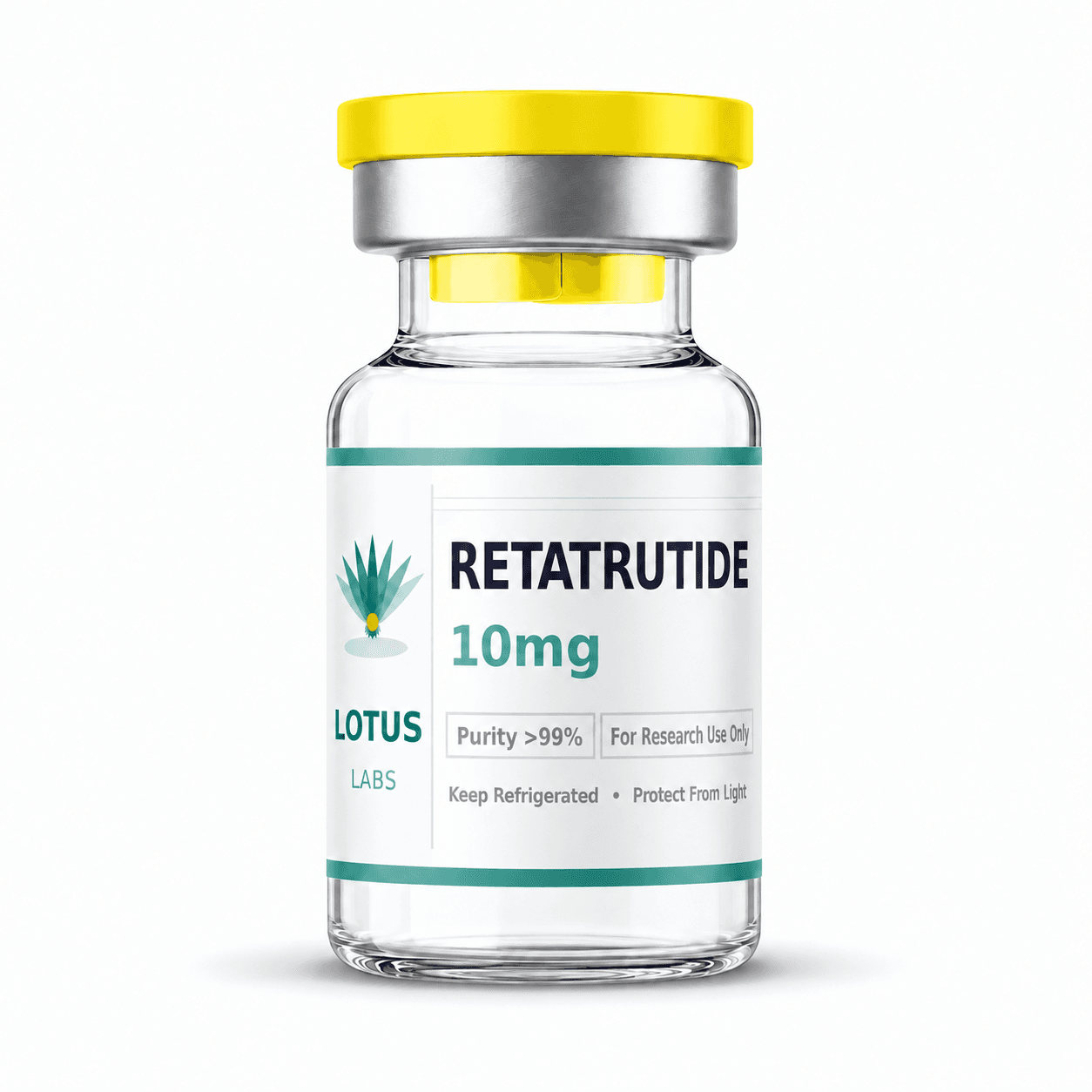
Retatrutide
10mg/vial · Triple GIP/GLP-1/Glucagon Agonist
Retatrutide is a next-generation triple agonist targeting GLP-1, GIP, and glucagon receptors simultaneously. Phase 2 clinical trials demonstrated up to 24.2% mean body weight reduction at 48 weeks — the highest efficacy reported among investigational peptides.The glucagon receptor component adds direct hepatic fat oxidation, making it uniquely potent for metabolic research.
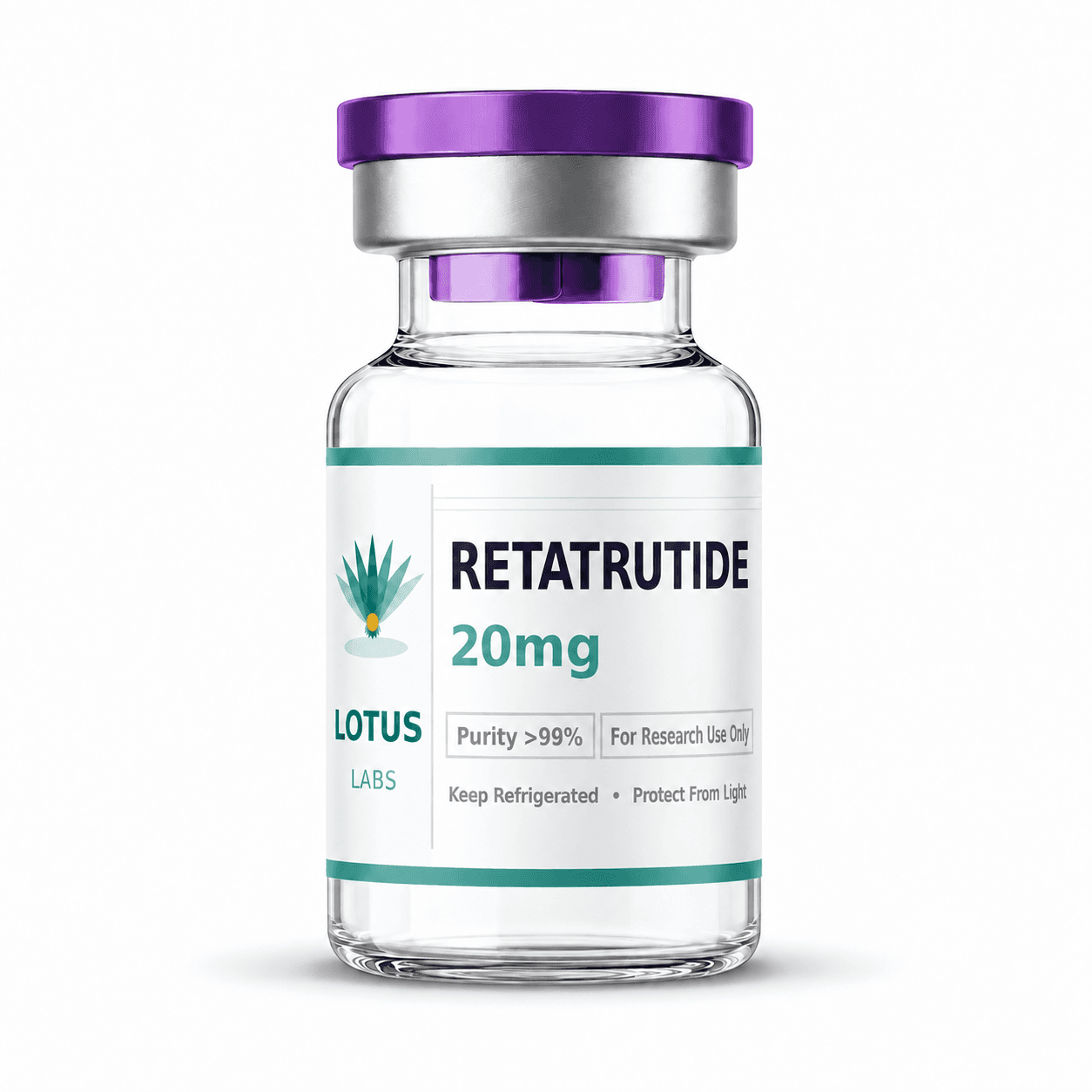
Retatrutide
20mg/vial · Triple GIP/GLP-1/Glucagon Agonist — Extended Protocol
Retatrutide is a next-generation triple agonist targeting GLP-1, GIP, and glucagon receptors simultaneously. Phase 2 clinical trials demonstrated up to 24.2% mean body weight reduction at 48 weeks — the highest efficacy reported among investigational peptides.The glucagon receptor component adds direct hepatic fat oxidation, making it uniquely potent for metabolic research.
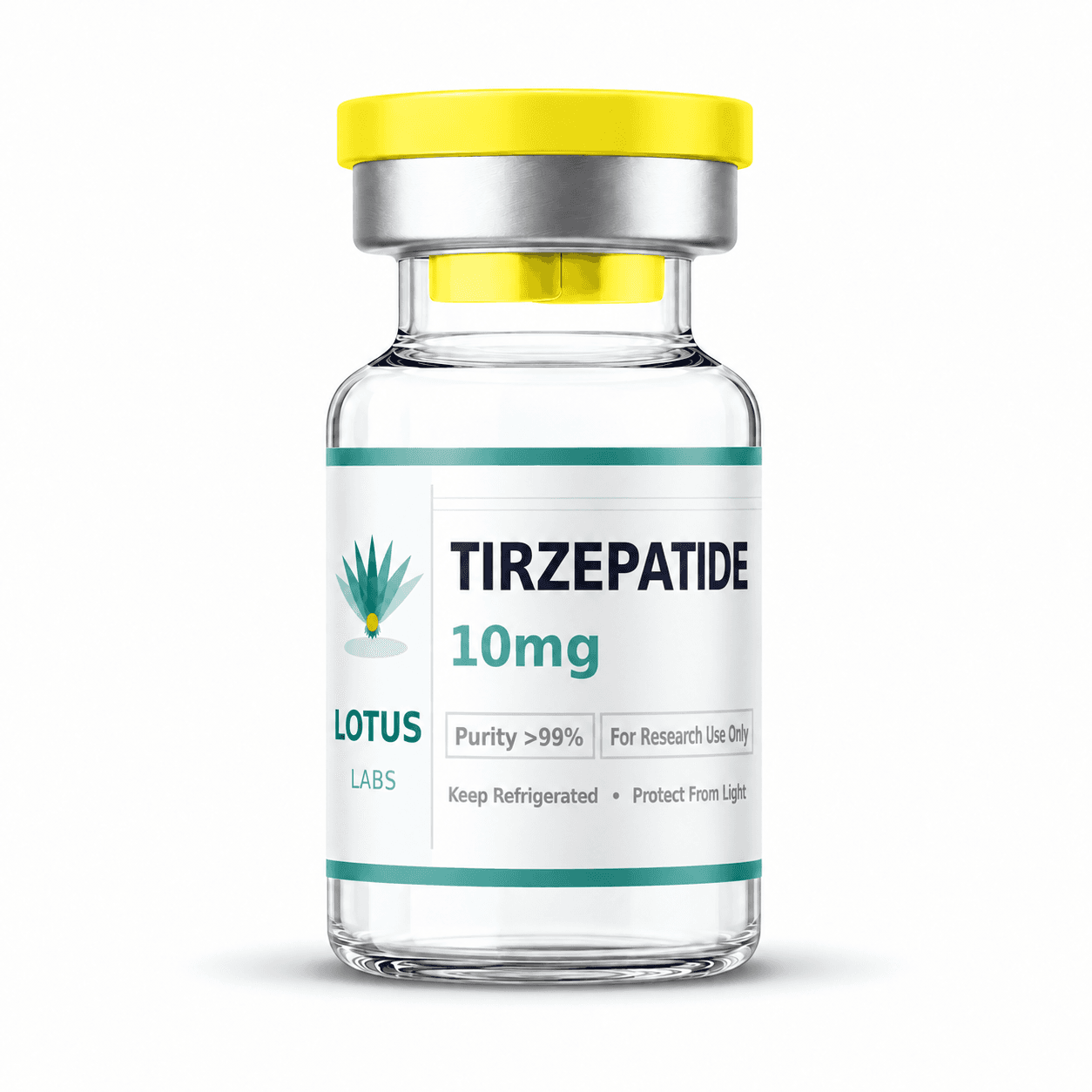
Tirzepatide
10mg/vial · Dual GIP/GLP-1 Agonist
Tirzepatide is a dual GIP and GLP-1 receptor agonist that demonstrated up to 22.5% weight reduction in the SURMOUNT clinical trials. Marketed as Mounjaro for type 2 diabetes and Zepbound for weight management, it combines complementary metabolic pathways for superior efficacy over single-receptor agonists — a benchmark peptide for obesity and metabolic research.