Retatrutide Phase 2: 24.2% Weight Loss in 48 Weeks
28 May 2026 · 9 min read
In June 2023, the New England Journal of Medicine published the first randomised, placebo-controlled Phase 2 trial of retatrutide in adults with obesity. At the highest dose of 12 mg once-weekly, participants lost an average of 24.2% of body weight over 48 weeks — the largest weight reduction ever recorded in a Phase 2 peptide weight-loss trial.
The short version
In a Phase 2 trial published in the New England Journal of Medicine in 2023, adults with obesity taking retatrutide at 12 mg once weekly lost an average of 24.2% of body weight over 48 weeks — around 26.4 kg. It was the largest reduction recorded in a Phase 2 weight-loss peptide trial at the time.
Retatrutide is a triple agonist, activating GLP-1, GIP and glucagon receptors. Phase 3 results have since begun reporting; see the TRIUMPH programme. Retatrutide is not an approved medicine, and nothing here is medical advice.
The Trial
338 adults with a BMI ≥30 (or ≥27 with a weight-related condition) were randomised to retatrutide at 1 mg, 4 mg, 8 mg, or 12 mg once weekly, or placebo, for 48 weeks. The study was double-blind and placebo-controlled.
Key Results
At the 12 mg dose:
- 24.2% mean body weight reduction from baseline at 48 weeks
- Mean weight loss of approximately 26.4 kg (58 lbs)
- 100% of participants achieved at least 5% weight loss, 93% at least 10%, and 83% at least 15%
- 26% achieved ≥30% weight loss — a threshold rarely reached in prior trials
The dose-response was clear: the 4 mg group lost 8.7% and the 8 mg group lost 17.3%, demonstrating that higher doses compound the effect significantly.
The dose-response curve is the part of this trial that carried the most weight scientifically. A single impressive number at one dose can be noise or a favourable population; a clean gradient across four doses is much harder to explain any other way. Retatrutide produced 8.7% at 4 mg, 17.3% at 8 mg and 24.2% at 12 mg, and that ordering is the strongest evidence in the paper that the effect is real and attributable to the compound.
"The magnitude of weight loss with retatrutide was unprecedented in a Phase 2 study." — Jastreboff et al., NEJM 2023
What a Phase 2 trial does and doesn't tell you
Phase 2 exists to answer two questions: does the compound work at all, and at what dose. It is deliberately smaller and shorter than what follows — 338 participants over 48 weeks here, against several thousand over 80 weeks in Phase 3.
That size difference matters when reading the result. A Phase 2 trial is well suited to establishing a dose-response curve, which this one did clearly. It is not large enough to characterise uncommon adverse events, and it is not long enough to say much about what happens after the trial ends. Those are Phase 3 questions.
So 24.2% was a genuine signal rather than a final answer, and the value of the Phase 3 TRIUMPH readouts is that they test the same compound at a scale where rarer problems would surface.
Why Three Receptors?
Semaglutide activates one receptor (GLP-1). Tirzepatide activates two (GLP-1 + GIP). Retatrutide activates three: GLP-1, GIP, and glucagon receptors simultaneously. The glucagon receptor component increases basal energy expenditure — the body burns more at rest — while GLP-1 and GIP suppress appetite and improve insulin sensitivity. The triple combination produces a synergistic effect no single- or dual-agonist has matched in published trials.
Safety
Adverse events were primarily gastrointestinal (nausea, vomiting, diarrhoea), consistent with the GLP-1 class and most common during dose escalation. No serious dose-limiting toxicities were reported. A mean heart rate increase of approximately 5–7 bpm was observed at higher doses — a known class effect seen with other GLP-1 agonists.
How it compares across trials
| Compound | Receptors | Trial | Duration | Mean weight loss |
|---|---|---|---|---|
| Semaglutide | 1 (GLP-1) | STEP-1 | 68 weeks | ~14.9% |
| Tirzepatide | 2 (GLP-1, GIP) | SURMOUNT-1 | 72 weeks | ~22.5% |
| Retatrutide | 3 (GLP-1, GIP, glucagon) | Phase 2 | 48 weeks | ~24.2% |
| Retatrutide | 3 (GLP-1, GIP, glucagon) | TRIUMPH-1 (Ph 3) | 80 weeks | ~25% |
One caveat worth stating plainly: these are separate trials, not a head-to-head comparison. They enrolled different populations, ran for different durations, and used different escalation schedules. The ordering has been consistent across independent programmes, which is what makes it interesting — but a table like this is indicative rather than a controlled result, and the only way to settle it properly would be a trial that ran the compounds against each other directly.
The duration column is the one most often ignored. Retatrutide's Phase 2 figure came at 48 weeks, the shortest window in the table, while semaglutide's came at 68. Weight-loss curves in this class have generally not fully plateaued by the end of trial, so comparing endpoints measured at different times understates the shorter trial.
Context in the GLP-1 Landscape
The Phase 2 data positioned retatrutide as the most efficacious weight-loss peptide in clinical development at the time of publication, surpassing tirzepatide's SURMOUNT-1 result of 22.5% and semaglutide's STEP-1 result of 14.9%. Update (2026): the Phase 3 TRIUMPH results have now begun to report — roughly 25% mean weight loss at 80 weeks on the top dose.
Frequently asked questions
What did the retatrutide Phase 2 trial show? Adults with obesity taking retatrutide at 12 mg once weekly lost an average of 24.2% of body weight over 48 weeks, roughly 26.4 kg, against a clear dose-response at lower doses.
Over what period was the 24.2% figure measured? 48 weeks, in a double-blind placebo-controlled trial of 338 adults published in the New England Journal of Medicine in 2023.
What is a triple agonist? A compound that activates three receptors at once — in retatrutide's case GLP-1, GIP and glucagon. Semaglutide activates one and tirzepatide two, which is the mechanistic reason the three compounds rank as they do across trials.
How does the Phase 2 result compare to Phase 3? Phase 2 recorded 24.2% at 48 weeks on the top dose. The Phase 3 TRIUMPH programme has since reported roughly 25% at 80 weeks, so the larger and longer trial has broadly held the Phase 2 signal rather than eroding it.
What were the side effects in the trial? Adverse events were primarily gastrointestinal — nausea, vomiting and diarrhoea — most common during dose escalation and consistent with the GLP-1 class. No serious dose-limiting toxicities were reported, alongside a mean heart-rate increase of about 5 to 7 bpm at higher doses.
How many participants reached significant weight loss? At the 12 mg dose, every participant achieved at least 5% weight loss, 93% achieved at least 10%, and 83% achieved at least 15%. 26% achieved at least 30%, a threshold rarely reached in prior trials.
Is retatrutide approved? No. It remains an investigational compound and is not approved by any regulator. Lotus Labs supplies it for research purposes only.
Lotus Labs supplies all products for research purposes only. This article summarises published trial data and is not medical advice.
Reference
Jastreboff AM, Kaplan LM, Frías JP, et al. Triple-Hormone-Receptor Agonist Retatrutide for Obesity — A Phase 2 Trial. N Engl J Med 2023;389:514–526. https://www.nejm.org/doi/full/10.1056/NEJMoa2301972
Related peptides
Research-grade, free tracked delivery across Thailand.
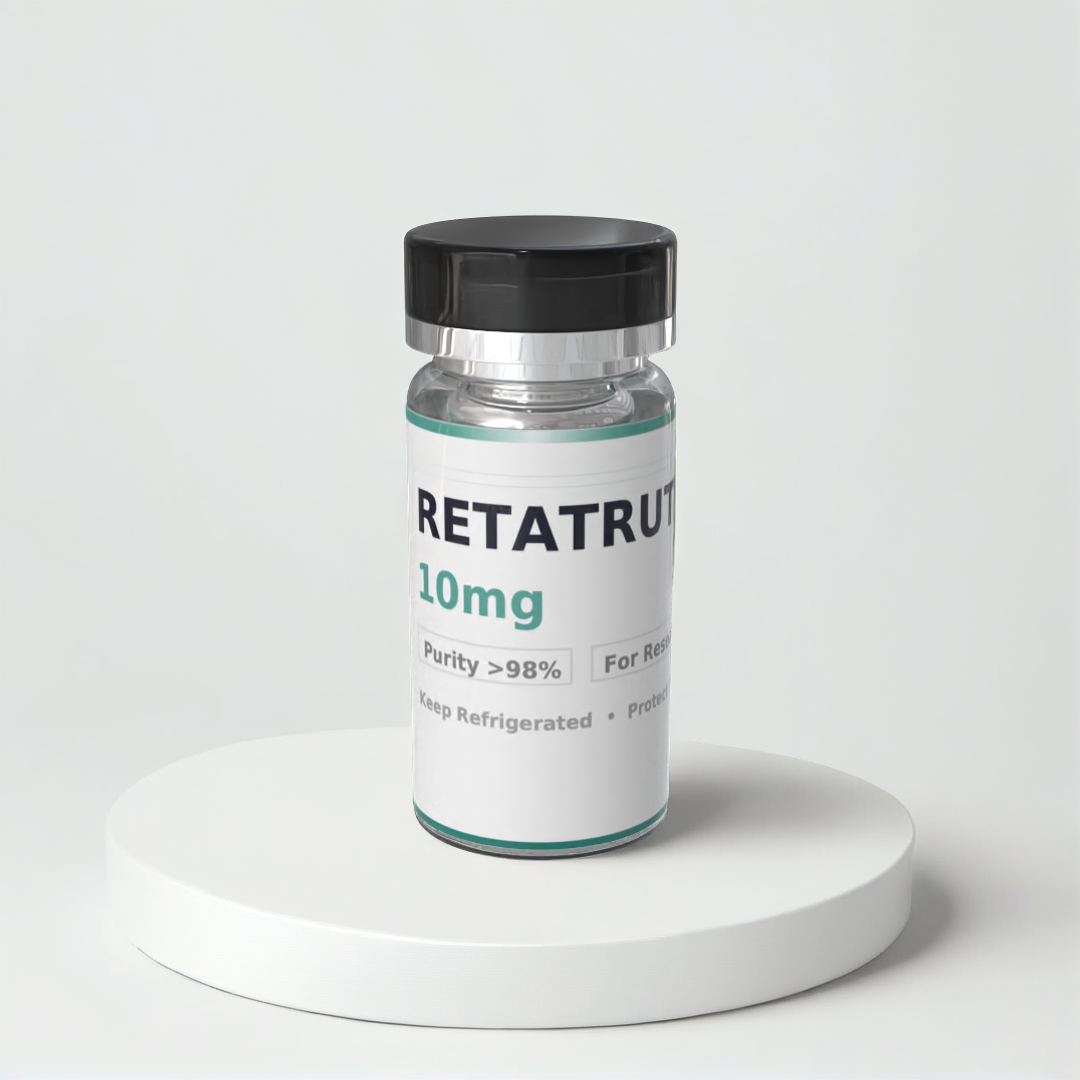
Retatrutide
10mg/vial · Triple GIP/GLP-1/Glucagon Agonist
Retatrutide is a next-generation triple agonist targeting GLP-1, GIP, and glucagon receptors simultaneously. Phase 2 clinical trials demonstrated up to 24.2% mean body weight reduction at 48 weeks — the highest efficacy reported among investigational peptides.The glucagon receptor component adds direct hepatic fat oxidation, making it uniquely potent for metabolic research.
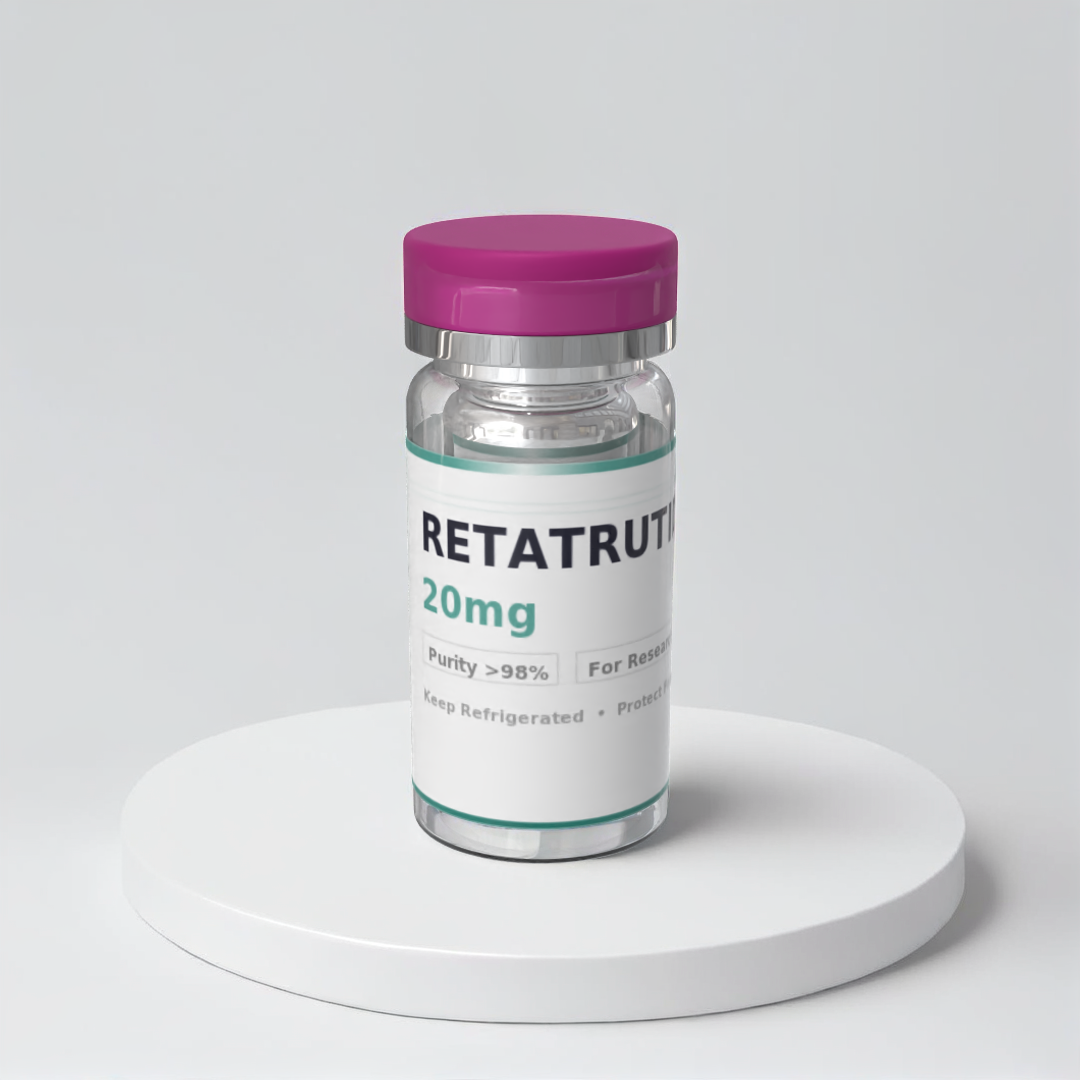
Retatrutide
20mg/vial · Triple GIP/GLP-1/Glucagon Agonist — Extended Protocol
Retatrutide is a next-generation triple agonist targeting GLP-1, GIP, and glucagon receptors simultaneously. Phase 2 clinical trials demonstrated up to 24.2% mean body weight reduction at 48 weeks — the highest efficacy reported among investigational peptides.The glucagon receptor component adds direct hepatic fat oxidation, making it uniquely potent for metabolic research.
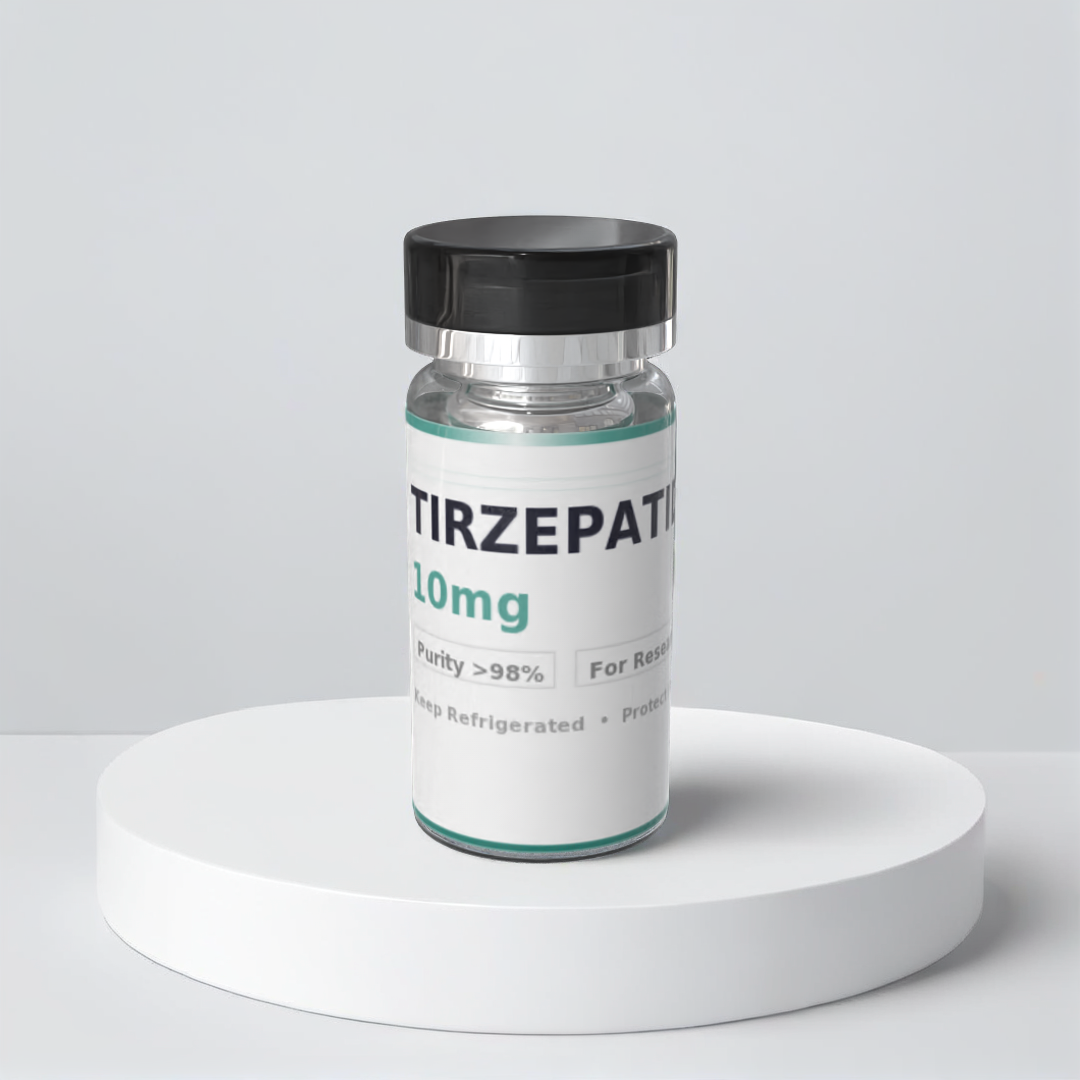
Tirzepatide
10mg/vial · Dual GIP/GLP-1 Agonist
Tirzepatide is a dual GIP and GLP-1 receptor agonist that demonstrated up to 22.5% weight reduction in the SURMOUNT clinical trials. Marketed as Mounjaro for type 2 diabetes and Zepbound for weight management, it combines complementary metabolic pathways for superior efficacy over single-receptor agonists — a benchmark peptide for obesity and metabolic research.