What Is a Research Peptide? The Pipeline from Lab to Clinic
26 March 2026 · 9 min read
The term "research peptide" appears throughout scientific literature, but its meaning is often misunderstood. This post explains what research peptides are, how they progress through the clinical pipeline, and what the different stages of evidence actually mean.
The short version
A research peptide is a short chain of amino acids that has a defined structure and mechanism, has been studied in laboratory or clinical settings, and has not been approved by a regulator for the use in question.
The label describes regulatory status, not scientific quality. Some research peptides have thousands of subjects of published trial data behind them; others have only animal work. Knowing which is which is the whole point of the distinction, and it is what the development pipeline below lets you read off.
What Is a Peptide?
A peptide is a short chain of amino acids — the same building blocks as proteins, but smaller. Most peptides are between 2 and 50 amino acids long. Many are naturally occurring: insulin is a peptide, glucagon is a peptide, growth hormone-releasing hormone is a peptide. Others are synthetic analogues — chemically modified versions designed to improve stability, potency, or receptor selectivity.
What Makes a Peptide a "Research Peptide"?
A research peptide is a compound that:
- Has a defined chemical structure and mechanism of action
- Has been studied in controlled laboratory or clinical settings
- Has not yet been approved by a regulatory body (such as the FDA or EMA) for a specific therapeutic use — or has been approved for one use but is being researched for others
The label reflects regulatory status, not scientific legitimacy. Many research peptides have extensive peer-reviewed literature. Some — like tesamorelin — have subsequently achieved FDA approval.
The Development Pipeline
Preclinical research begins with cell studies (in vitro) and animal models (in vivo). This stage establishes basic safety, mechanism, and a dose range. The vast majority of compounds never advance past this stage.
Phase I trials are first-in-human studies, typically in 20–80 healthy volunteers. The primary goal is safety and pharmacokinetics — how the compound is absorbed, distributed, metabolised, and excreted. Thymosin Beta-4 (TB-500) has Phase I data in 84 subjects establishing it as safe and well-tolerated in humans.
Phase II trials test efficacy for the first time in a target population — typically 100–500 subjects. The retatrutide Phase 2 trial (338 subjects, NEJM 2023) is an example of a Phase II demonstrating remarkable efficacy.
Phase III trials are large, multi-centre, pivotal studies — typically 1,000–5,000 subjects — designed to confirm efficacy and long-term safety to the standard required for regulatory approval. Semaglutide's STEP-1 (1,961 subjects) and tirzepatide's SURMOUNT-1 (2,539 subjects) are Phase III trials.
Regulatory approval is the final stage. Once approved, a compound is no longer a "research peptide" for its approved indication — but may remain a research peptide for other applications being studied.
How to judge where a compound actually sits
The pipeline stages are only useful if you can place a specific compound on them. Three questions do most of that work.
Is there any human data at all? This is the largest single dividing line, and it separates compounds more sharply than anything else. BPC-157 has decades of animal literature and one two-subject safety pilot in humans. Semaglutide has Phase III trials in thousands. Both are discussed in similar language online; they are not remotely comparable evidence.
Is the human data safety or efficacy? These answer different questions, and a safety trial does not tell you whether something works. Thymosin beta-4's Phase I trial in 84 volunteers establishes that it was well tolerated — it was never designed to show that it repairs anything.
Does the evidence cover the use being discussed? A compound can have genuine trial data for one indication and none for the one it is actually sold on. Tesamorelin is FDA approved, but for HIV-associated lipodystrophy specifically. GHK-Cu's most-cited human trial tested a topical cream, not an injection.
Applied consistently, those three questions dissolve most of the confusion in this category — and they are questions a supplier should be able to answer plainly about anything they list.
Why This Matters
Understanding where a peptide sits in the pipeline tells you how much human evidence exists. A compound with robust Phase III data in thousands of subjects is qualitatively different from one with only animal studies. At Lotus Labs, all products are supplied for research purposes — we publish the underlying clinical evidence so researchers understand the strength of the available data for each compound.
Frequently asked questions
What is a research peptide? A short chain of amino acids with a defined structure and mechanism that has been studied in laboratory or clinical settings but has not been approved by a regulator such as the FDA or EMA for the use in question.
Is "research peptide" a scientific category or a regulatory one? Regulatory. The term describes approval status rather than scientific legitimacy or quality of evidence. Some research peptides have extensive peer-reviewed literature behind them and some have almost none.
What is the difference between a peptide and a protein? Length. Both are chains of amino acids, and peptides are the shorter ones — most are between 2 and 50 amino acids. Insulin, glucagon and growth hormone-releasing hormone are all peptides.
What do the clinical trial phases mean? Phase I is first-in-human safety and pharmacokinetics, typically 20 to 80 healthy volunteers. Phase II tests efficacy for the first time in a target population, typically 100 to 500 subjects. Phase III is the large pivotal stage, typically 1,000 to 5,000 subjects, designed to support regulatory approval.
Can a research peptide become an approved medicine? Yes. Tesamorelin was studied as a research compound and subsequently received FDA approval for a specific indication. A compound can also remain a research peptide for other uses still being studied.
How can I tell how much evidence a peptide has? Ask three questions: is there any human data, is it safety or efficacy data, and does it cover the use being discussed. Those three separate compounds with thousands of trial subjects from ones resting on animal studies.
Are research peptides medicines? No. They are not approved medicines, they are not prescribed, and no supplier should be advising on personal dosing. Lotus Labs supplies all products for research purposes only.
Lotus Labs supplies all products for research purposes only. This article is general information about clinical research and is not medical advice.
Related peptides
Research-grade, free tracked delivery across Thailand.
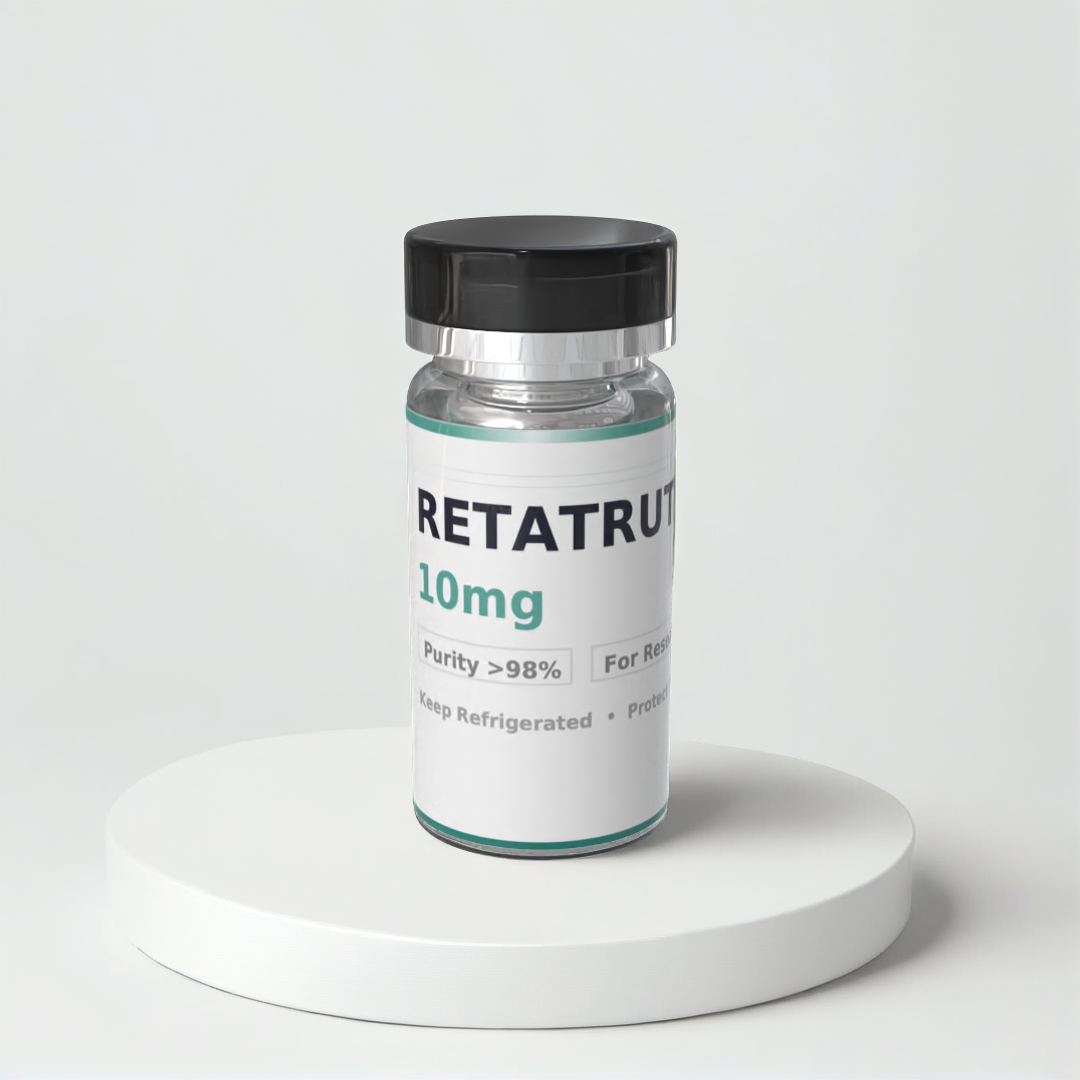
Retatrutide
10mg/vial · Triple GIP/GLP-1/Glucagon Agonist
Retatrutide is a next-generation triple agonist targeting GLP-1, GIP, and glucagon receptors simultaneously. Phase 2 clinical trials demonstrated up to 24.2% mean body weight reduction at 48 weeks — the highest efficacy reported among investigational peptides.The glucagon receptor component adds direct hepatic fat oxidation, making it uniquely potent for metabolic research.
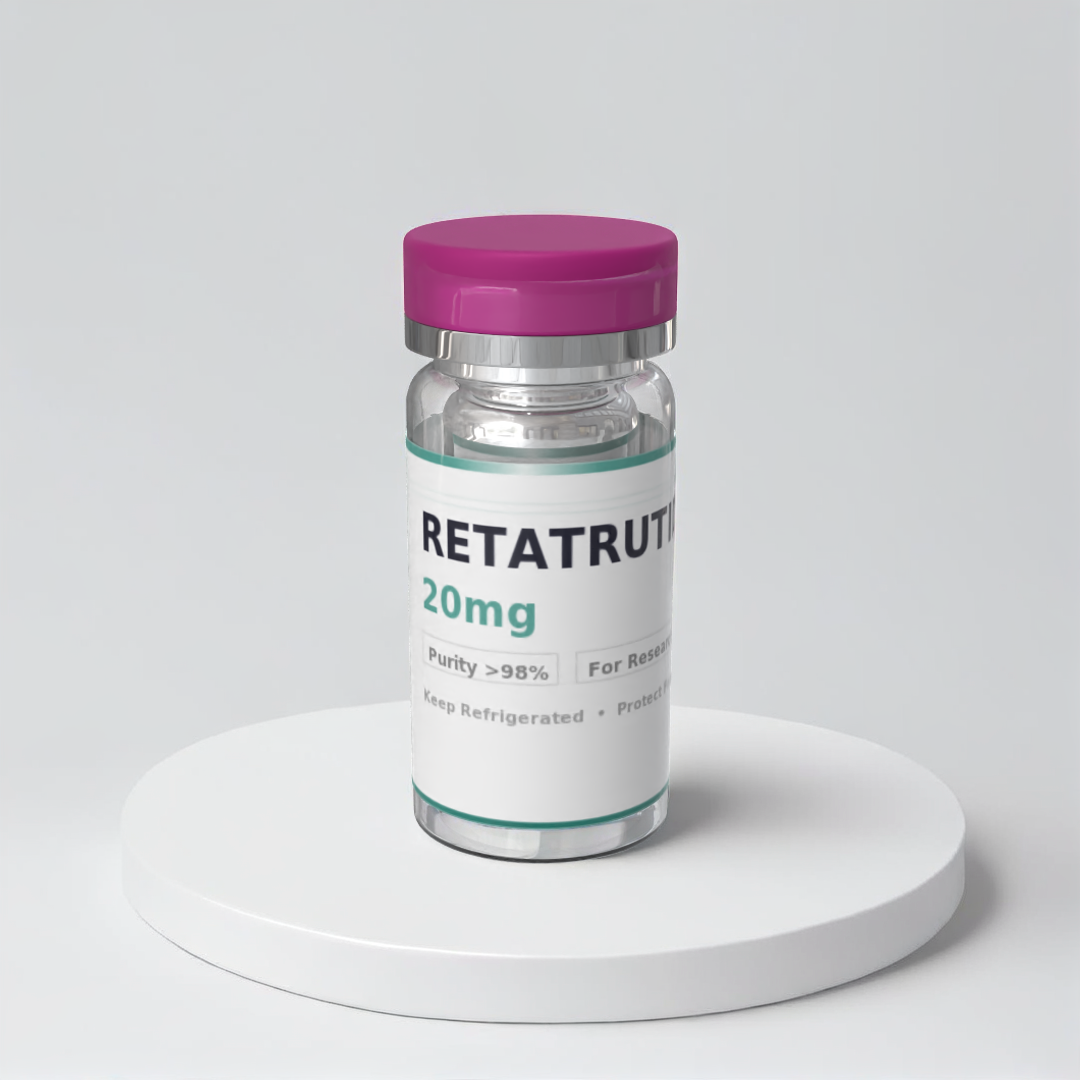
Retatrutide
20mg/vial · Triple GIP/GLP-1/Glucagon Agonist — Extended Protocol
Retatrutide is a next-generation triple agonist targeting GLP-1, GIP, and glucagon receptors simultaneously. Phase 2 clinical trials demonstrated up to 24.2% mean body weight reduction at 48 weeks — the highest efficacy reported among investigational peptides.The glucagon receptor component adds direct hepatic fat oxidation, making it uniquely potent for metabolic research.
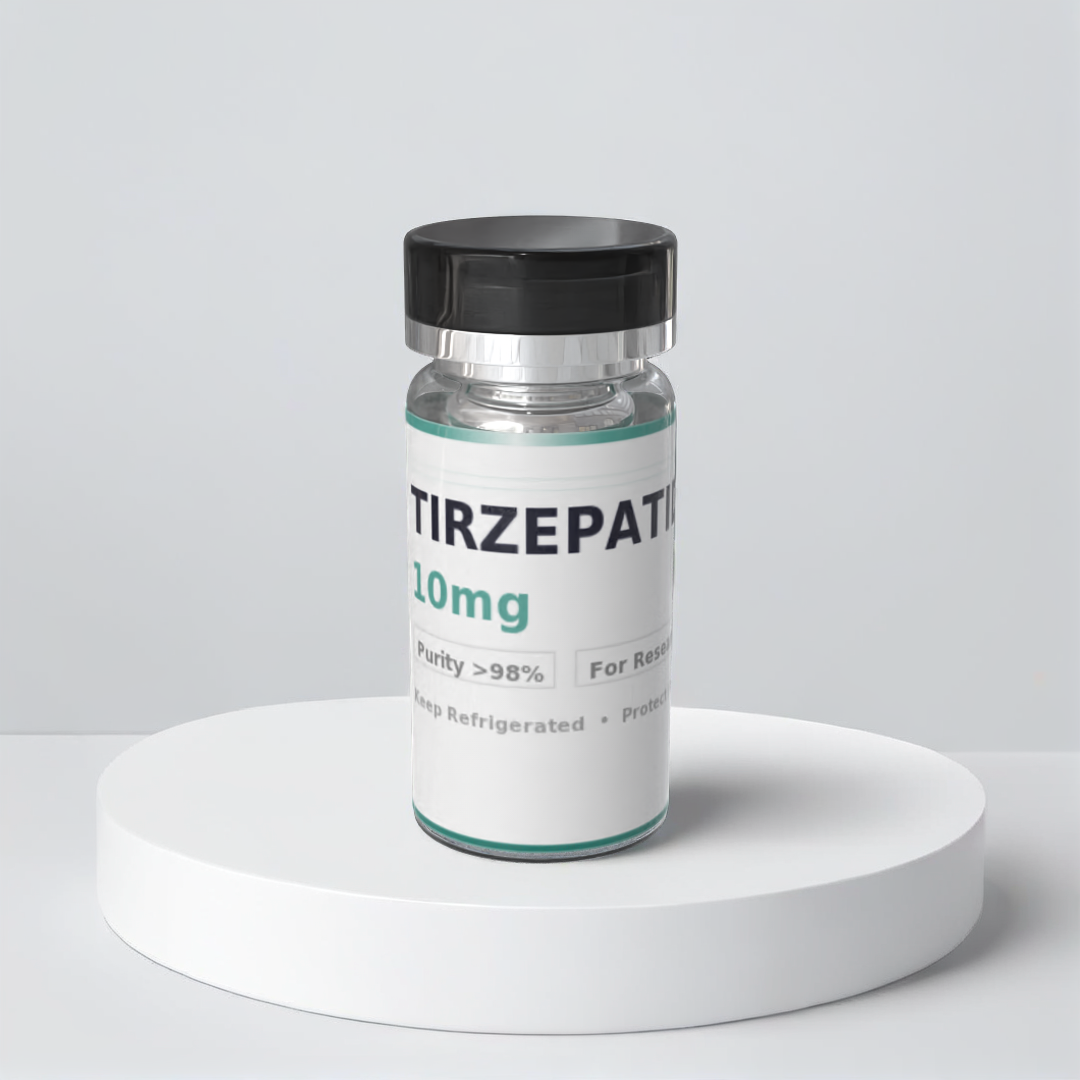
Tirzepatide
10mg/vial · Dual GIP/GLP-1 Agonist
Tirzepatide is a dual GIP and GLP-1 receptor agonist that demonstrated up to 22.5% weight reduction in the SURMOUNT clinical trials. Marketed as Mounjaro for type 2 diabetes and Zepbound for weight management, it combines complementary metabolic pathways for superior efficacy over single-receptor agonists — a benchmark peptide for obesity and metabolic research.