SURMOUNT-1: Tirzepatide Achieves 22.5% Weight Reduction in 72 Weeks
21 May 2026 · 9 min read
In July 2022, the New England Journal of Medicine published SURMOUNT-1 — a landmark Phase 3 trial of tirzepatide in adults with obesity. At the highest dose of 15 mg once-weekly, participants lost an average of 22.5% of body weight (approximately 24 kg / 52 lbs) over 72 weeks. At the time of publication, this was the largest weight reduction ever demonstrated by a pharmacological agent.
The short version
SURMOUNT-1 was the pivotal Phase 3 trial of once-weekly tirzepatide, published in the New England Journal of Medicine in 2022. Across 2,539 adults with obesity, the top 15 mg dose produced 22.5% mean weight loss over 72 weeks — about 24 kg.
Tirzepatide is a dual agonist, activating both GIP and GLP-1 receptors, and it is marketed as Mounjaro for type 2 diabetes and Zepbound for weight management. Nothing here is medical advice.
The Trial
2,539 adults with a BMI ≥30 (or ≥27 with at least one weight-related condition, but without type 2 diabetes) were randomised to tirzepatide at 5 mg, 10 mg, or 15 mg once weekly, or placebo, for 72 weeks. The study was double-blind and placebo-controlled.
Key Results
At the 15 mg dose:
- 22.5% mean body weight reduction from baseline
- Mean weight loss of approximately 24 kg (52 lbs)
- 91% of participants lost at least 5% of body weight vs. 35% on placebo
- 57% lost at least 20% of body weight — a magnitude previously only seen with bariatric surgery
At 10 mg, mean weight loss was 19.5%. At 5 mg, it was 15.0% — all statistically significant vs. placebo.
"Tirzepatide produced sustained, clinically meaningful reductions in body weight that were greater than those seen with any approved anti-obesity medication." — Jastreboff et al., NEJM 2022
Mounjaro, Zepbound, and what to call it
Like semaglutide, tirzepatide is sold under two brand names depending on the approved indication, and the two are frequently written about as if they were different drugs.
Mounjaro is tirzepatide for type 2 diabetes. Zepbound is the same molecule approved for chronic weight management. Both are once-weekly injections of tirzepatide; the difference is the indication on the label, not the compound in the pen.
SURMOUNT-1 was the obesity trial, so its results underpin the Zepbound indication. The SURPASS programme was the corresponding diabetes work behind Mounjaro.
Dual Receptor Mechanism
Tirzepatide is a dual GIP/GLP-1 receptor agonist — the first of its kind approved for obesity. GLP-1 receptor activation suppresses appetite and slows gastric emptying. GIP receptor activation enhances the metabolic effect and appears to improve the tolerability of the GLP-1 component. The combination achieves greater fat loss than GLP-1 alone.
Why the dose-response matters
The three doses produced 15.0%, 19.5% and 22.5% at 5 mg, 10 mg and 15 mg respectively. That gradient is doing a lot of work in interpreting the trial.
A clean dose-response is among the strongest available evidence that an effect is caused by the compound rather than by trial conditions, expectation, or the lifestyle support both arms received. Three doses stepping upward in order is difficult to produce by chance.
It also has a practical reading: the lowest dose tested still produced 15.0%, which is roughly what semaglutide achieved at its weight-management dose in STEP-1. Tirzepatide's floor was approximately semaglutide's ceiling.
The 20% threshold
The single most-quoted secondary result from SURMOUNT-1 is that 57% of participants at the top dose lost at least 20% of body weight.
That threshold carries specific weight because it had previously been the province of bariatric surgery. Weight-loss pharmacotherapy had not put more than half a trial population past 20%, and the comparison people reached for when discussing that magnitude of loss was a surgical one, with the recovery, risk and irreversibility that implies.
A drug reaching it changes the shape of the decision rather than just the size of the effect. It does not make the two interchangeable — surgery and a weekly injection differ in durability, cost, monitoring and what happens when you stop — but it introduced a comparison that had not previously been available.
This is also the figure most likely to be misread. 57% at 20% or more means 43% did not reach it, and the trial reports a distribution rather than a guarantee.
Safety
Nausea, diarrhoea, and vomiting were the most common adverse events, predominantly mild-to-moderate and highest during dose escalation. Serious adverse events occurred in 6.3% of the tirzepatide group vs. 4.3% placebo — a difference driven partly by cholelithiasis (gallstones), a known consequence of rapid weight loss rather than a direct drug effect.
Why This Matters
SURMOUNT-1 demonstrated that dual-receptor agonism meaningfully outperforms single-receptor GLP-1 therapy. The 22.5% result at 15 mg represented a step-change from semaglutide's 14.9% in STEP-1, validating the hypothesis that targeting multiple metabolic pathways produces compounding benefits.
Frequently asked questions
What did the SURMOUNT-1 trial show? Adults with obesity taking once-weekly tirzepatide at 15 mg lost a mean 22.5% of body weight over 72 weeks, roughly 24 kg, in a trial of 2,539 participants published in the New England Journal of Medicine in 2022.
How much weight did people lose on tirzepatide? About 24 kg on average at the 15 mg dose. 91% of participants lost at least 5% of body weight against 35% on placebo, and 57% lost at least 20% — a magnitude previously seen mainly with bariatric surgery.
What is the difference between Mounjaro and Zepbound? They are the same molecule with different approved indications — Mounjaro is tirzepatide for type 2 diabetes, Zepbound is tirzepatide for chronic weight management. SURMOUNT-1 was the obesity trial behind the Zepbound indication.
What is a dual agonist? A compound that activates two receptors rather than one. Tirzepatide activates both GIP and GLP-1 receptors, where semaglutide activates GLP-1 alone, and the GIP component appears to add metabolic effect while improving tolerability.
How does tirzepatide compare to semaglutide? SURMOUNT-1 recorded 22.5% for tirzepatide over 72 weeks against 14.9% for semaglutide over 68 weeks in STEP-1. These are separate trials rather than a head-to-head comparison, but the gap is large and consistent with the dual-receptor mechanism.
What were the side effects? Nausea, diarrhoea and vomiting were the most common, predominantly mild to moderate and concentrated during dose escalation. Serious adverse events occurred in 6.3% of the tirzepatide group against 4.3% on placebo, driven partly by gallstones, which follow rapid weight loss generally rather than being a direct drug effect.
Did lower doses work? Yes, with a clear gradient — 15.0% at 5 mg, 19.5% at 10 mg and 22.5% at 15 mg, all statistically significant against placebo.
Lotus Labs supplies all products for research purposes only. This article summarises published trial data and is not medical advice.
Reference
Jastreboff AM, Koroleva AG, Stefanski A, et al. Tirzepatide Once Weekly for the Treatment of Obesity. N Engl J Med 2022;387:205–216. https://www.nejm.org/doi/full/10.1056/NEJMoa2206038 · PMID: 35658024
Related peptides
Research-grade, free tracked delivery across Thailand.
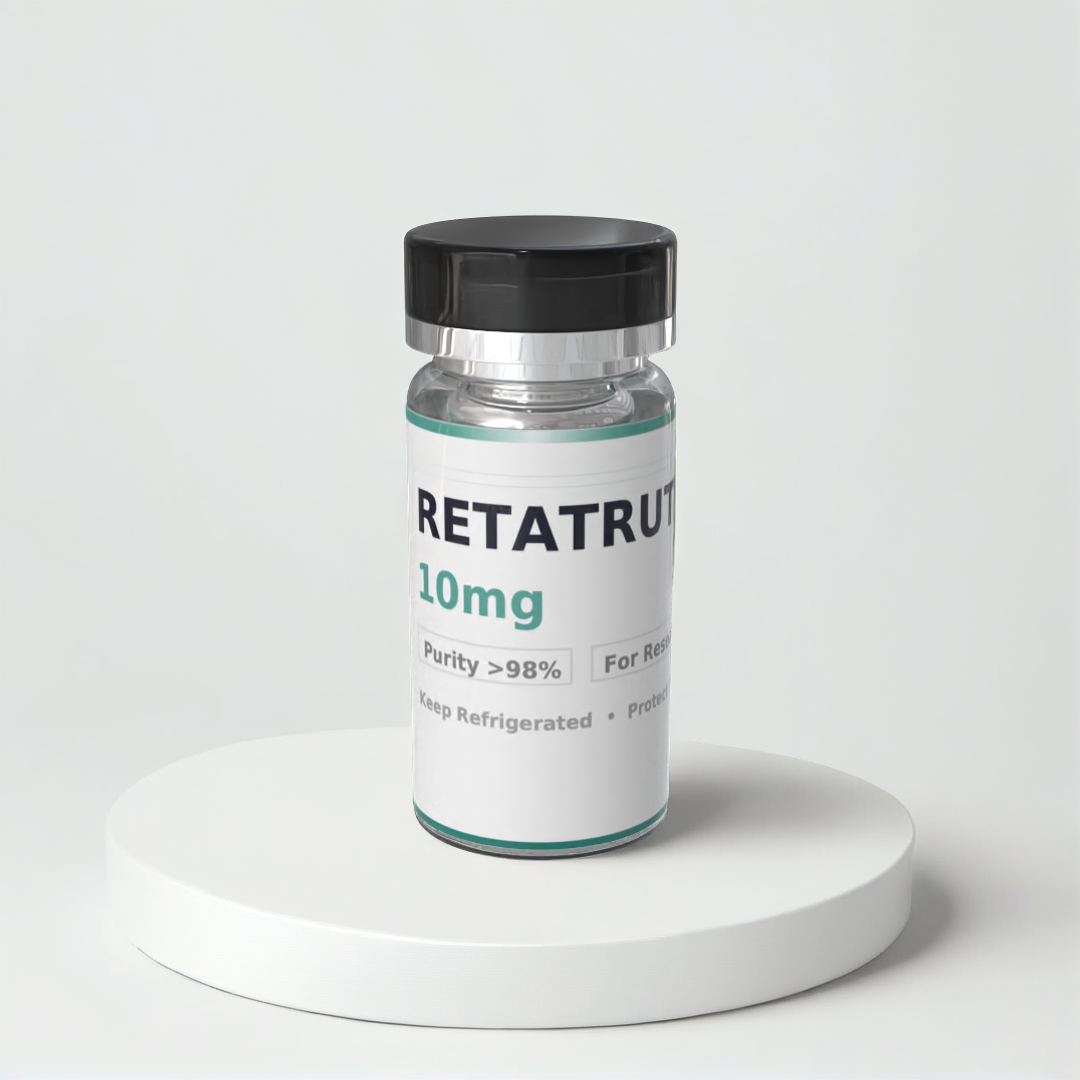
Retatrutide
10mg/vial · Triple GIP/GLP-1/Glucagon Agonist
Retatrutide is a next-generation triple agonist targeting GLP-1, GIP, and glucagon receptors simultaneously. Phase 2 clinical trials demonstrated up to 24.2% mean body weight reduction at 48 weeks — the highest efficacy reported among investigational peptides.The glucagon receptor component adds direct hepatic fat oxidation, making it uniquely potent for metabolic research.
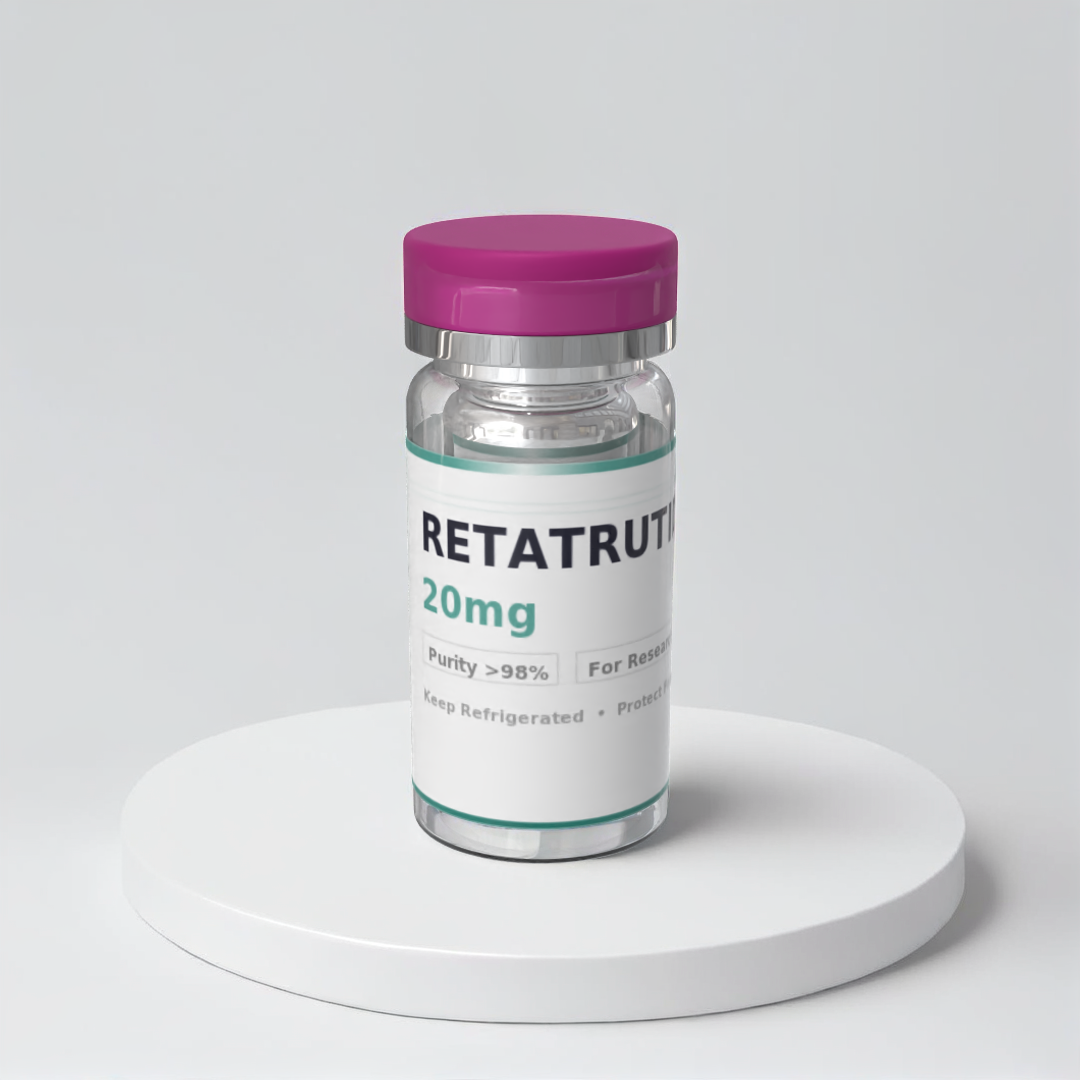
Retatrutide
20mg/vial · Triple GIP/GLP-1/Glucagon Agonist — Extended Protocol
Retatrutide is a next-generation triple agonist targeting GLP-1, GIP, and glucagon receptors simultaneously. Phase 2 clinical trials demonstrated up to 24.2% mean body weight reduction at 48 weeks — the highest efficacy reported among investigational peptides.The glucagon receptor component adds direct hepatic fat oxidation, making it uniquely potent for metabolic research.
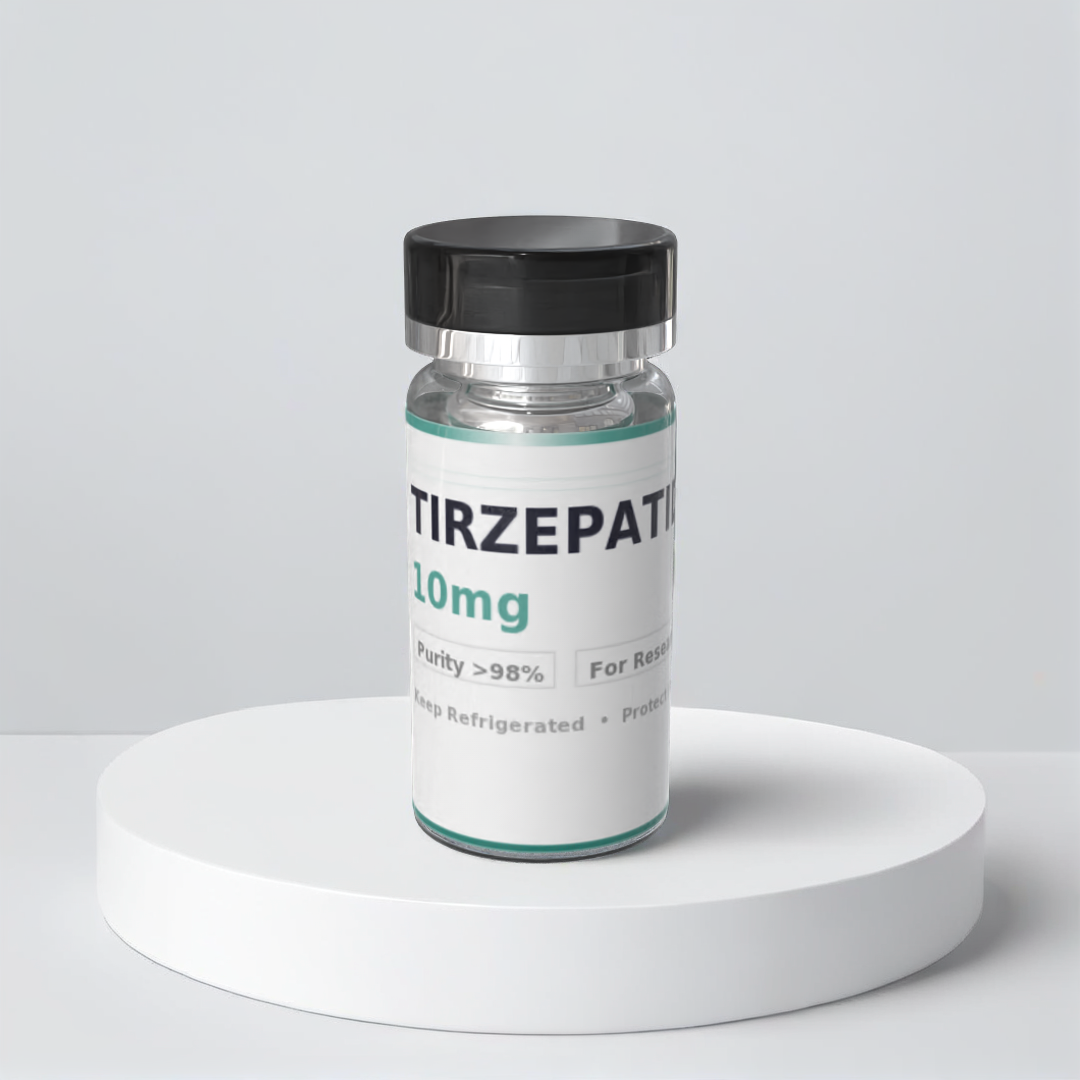
Tirzepatide
10mg/vial · Dual GIP/GLP-1 Agonist
Tirzepatide is a dual GIP and GLP-1 receptor agonist that demonstrated up to 22.5% weight reduction in the SURMOUNT clinical trials. Marketed as Mounjaro for type 2 diabetes and Zepbound for weight management, it combines complementary metabolic pathways for superior efficacy over single-receptor agonists — a benchmark peptide for obesity and metabolic research.