Tesamorelin and Visceral Fat: FDA-Approved Phase 3 Results
30 April 2026 · 8 min read
Tesamorelin holds a distinction no other peptide in the fat-loss category can claim: FDA approval for visceral fat reduction, granted in November 2010 under the brand name Egrifta. The clinical dataset behind that approval — a pooled analysis of two Phase 3 trials — provides some of the most rigorous human evidence for any research peptide.
The short version
Tesamorelin is the only peptide in the fat-loss category with FDA approval specifically for visceral fat reduction, granted in 2010 as Egrifta. The pooled Phase 3 analysis of 806 patients recorded a 15.4% mean reduction in visceral adipose tissue at 26 weeks, against a slight increase on placebo.
The approval is narrow: it covers HIV-associated lipodystrophy, not general weight loss. Tesamorelin is a GHRH analogue, meaning it prompts the body's own growth hormone release rather than supplying growth hormone directly. Nothing here is medical advice.
The Trial
The 2010 pooled analysis combined two multicenter, double-blind, placebo-controlled Phase 3 trials enrolling 806 HIV-positive adults on antiretroviral therapy who had developed excess abdominal fat (lipodystrophy) — a common side effect of HIV treatment. Participants received tesamorelin 2 mg/day or placebo via subcutaneous injection for 26 weeks.
Key Results
At 26 weeks:
- 15.4% mean reduction in visceral adipose tissue (VAT) in the tesamorelin group vs. a slight increase (+2 cm²) in placebo
- 69% of subjects in the tesamorelin group achieved a ≥8% reduction in VAT vs. 33% placebo
- Significant improvements in triglycerides and IGF-1 levels
- VAT reduction was sustained through 52 weeks in an extension phase
"Tesamorelin produced significant and sustained reductions in visceral adipose tissue with a generally favourable safety profile." — Falutz et al., JCEM 2010
How Tesamorelin Works
Tesamorelin is a synthetic analogue of growth hormone-releasing hormone (GHRH). It binds to GHRH receptors in the pituitary, stimulating the natural pulsatile release of growth hormone. Elevated GH then promotes lipolysis — the breakdown of fat — with a preferential effect on visceral (deep abdominal) fat compared to subcutaneous fat.
Unlike exogenous HGH, tesamorelin stimulates endogenous GH secretion, preserving the normal feedback loop. This is the reason its safety profile in the trials was manageable.
Why visceral fat specifically
Tesamorelin's endpoint was visceral adipose tissue rather than body weight, and that choice is the reason the trials measured with CT scans instead of a scale.
Visceral fat sits deep in the abdomen, packed around the organs, and is metabolically different from the subcutaneous fat directly under the skin. It is more lipolytically active, it drains into the portal circulation, and it is the depot most strongly associated with insulin resistance, dyslipidaemia and cardiovascular risk. Two people at the same weight and waist size can carry very different amounts of it.
Growth hormone mobilises fat generally, but its effect is disproportionately larger on the visceral depot. That is the mechanistic reason a GHRH analogue was investigated for this indication rather than for weight loss, and it is why the trials reported a percentage reduction in VAT rather than kilograms lost.
It also explains why the result does not translate directly into a number on the scale. A 15.4% reduction in a specific fat compartment is not the same claim as 15.4% weight loss, and the two are frequently conflated when this compound is discussed.
Safety
The most common adverse events were injection-site reactions, fluid retention (oedema), and arthralgia — consistent with increased GH activity. Glucose and insulin levels were monitored closely: there was no clinically meaningful worsening of glucose tolerance in the trials, which contributed to the FDA's approval decision.
What the approval does and doesn't cover
Tesamorelin's regulatory status is frequently overstated, so it is worth being precise.
The FDA approved tesamorelin in November 2010 for reduction of excess abdominal fat in HIV-infected patients with lipodystrophy. That is the indication. It is not approved for obesity, not approved for general visceral fat, and not approved for body composition in healthy adults.
That specificity is not arbitrary. The trials enrolled HIV-positive adults on antiretroviral therapy who had developed a particular pattern of fat redistribution as a treatment side effect. The population had a defined condition, a defined cause, and a defined endpoint measured by CT.
Whether the mechanism generalises is a separate question from whether the approval does. Stimulating endogenous growth hormone to mobilise visceral fat is not disease-specific in principle, which is why research interest continues — but "the mechanism should generalise" and "this has been demonstrated in that population" are different statements, and only the second is evidence.
Relevance Beyond HIV
While the FDA approval is specifically for HIV-associated lipodystrophy, the mechanism — stimulating endogenous GH to reduce visceral fat — is not disease-specific. Research interest in tesamorelin for general visceral adiposity and metabolic syndrome continues, with investigator-initiated studies ongoing as of 2026.
Frequently asked questions
What is tesamorelin? A synthetic analogue of growth hormone-releasing hormone. It binds GHRH receptors in the pituitary and stimulates the body's own pulsatile growth hormone release, rather than supplying growth hormone directly as exogenous HGH does.
Is tesamorelin FDA approved? Yes, but narrowly. It was approved in November 2010 under the brand name Egrifta for reducing excess abdominal fat in HIV-infected patients with lipodystrophy. It is not approved for obesity or for general visceral fat reduction.
How much visceral fat did it reduce? The pooled Phase 3 analysis of 806 patients recorded a 15.4% mean reduction in visceral adipose tissue at 26 weeks, against a slight increase on placebo. 69% of the tesamorelin group achieved at least an 8% reduction, against 33% on placebo.
How is tesamorelin different from HGH? Tesamorelin stimulates endogenous growth hormone secretion, which preserves the normal feedback loop that regulates how much is released. Exogenous HGH bypasses that loop by supplying the hormone directly.
Does it work outside HIV-associated lipodystrophy? The mechanism is not disease-specific, and investigator-initiated research continues, but the Phase 3 evidence and the approval both cover the HIV lipodystrophy population specifically.
What were the side effects? Injection-site reactions, fluid retention and joint pain were the most common, consistent with increased growth hormone activity. Glucose tolerance was monitored closely and showed no clinically meaningful worsening in the trials.
Was the effect sustained? Visceral fat reduction was maintained through 52 weeks in an extension phase of the trials.
Lotus Labs supplies all products for research purposes only. This article summarises published trial data and is not medical advice.
Reference
Falutz J, Mamputu JC, Potvin D, et al. Effects of tesamorelin (TH9507), a growth hormone-releasing factor analogue, in HIV-infected patients with excess abdominal fat: a pooled analysis of two multicenter, double-blind placebo-controlled phase 3 trials. J Clin Endocrinol Metab 2010;95(9):4291–4304. https://pubmed.ncbi.nlm.nih.gov/20554713/ · DOI: 10.1210/jc.2010-0490
Related peptides
Research-grade, free tracked delivery across Thailand.
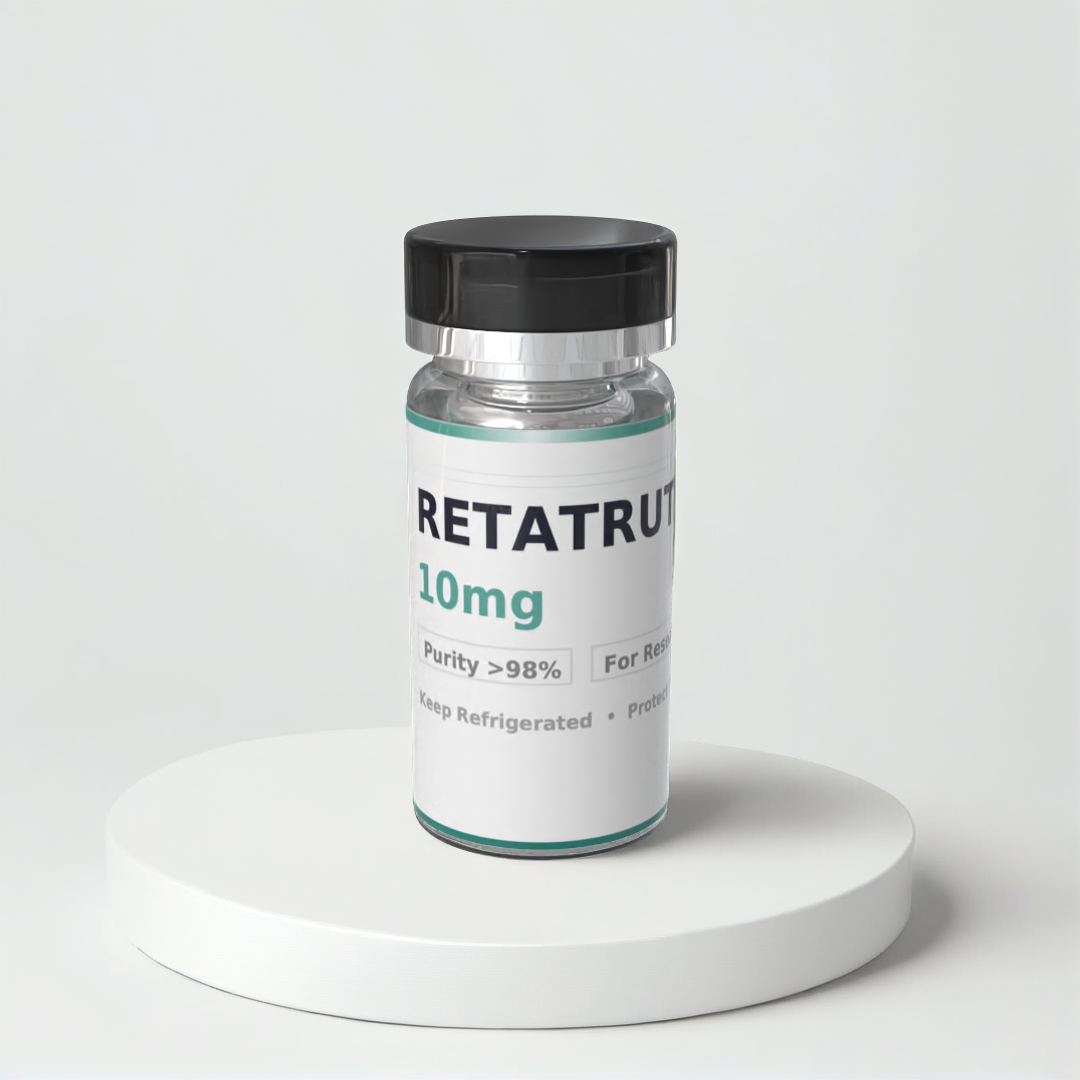
Retatrutide
10mg/vial · Triple GIP/GLP-1/Glucagon Agonist
Retatrutide is a next-generation triple agonist targeting GLP-1, GIP, and glucagon receptors simultaneously. Phase 2 clinical trials demonstrated up to 24.2% mean body weight reduction at 48 weeks — the highest efficacy reported among investigational peptides.The glucagon receptor component adds direct hepatic fat oxidation, making it uniquely potent for metabolic research.
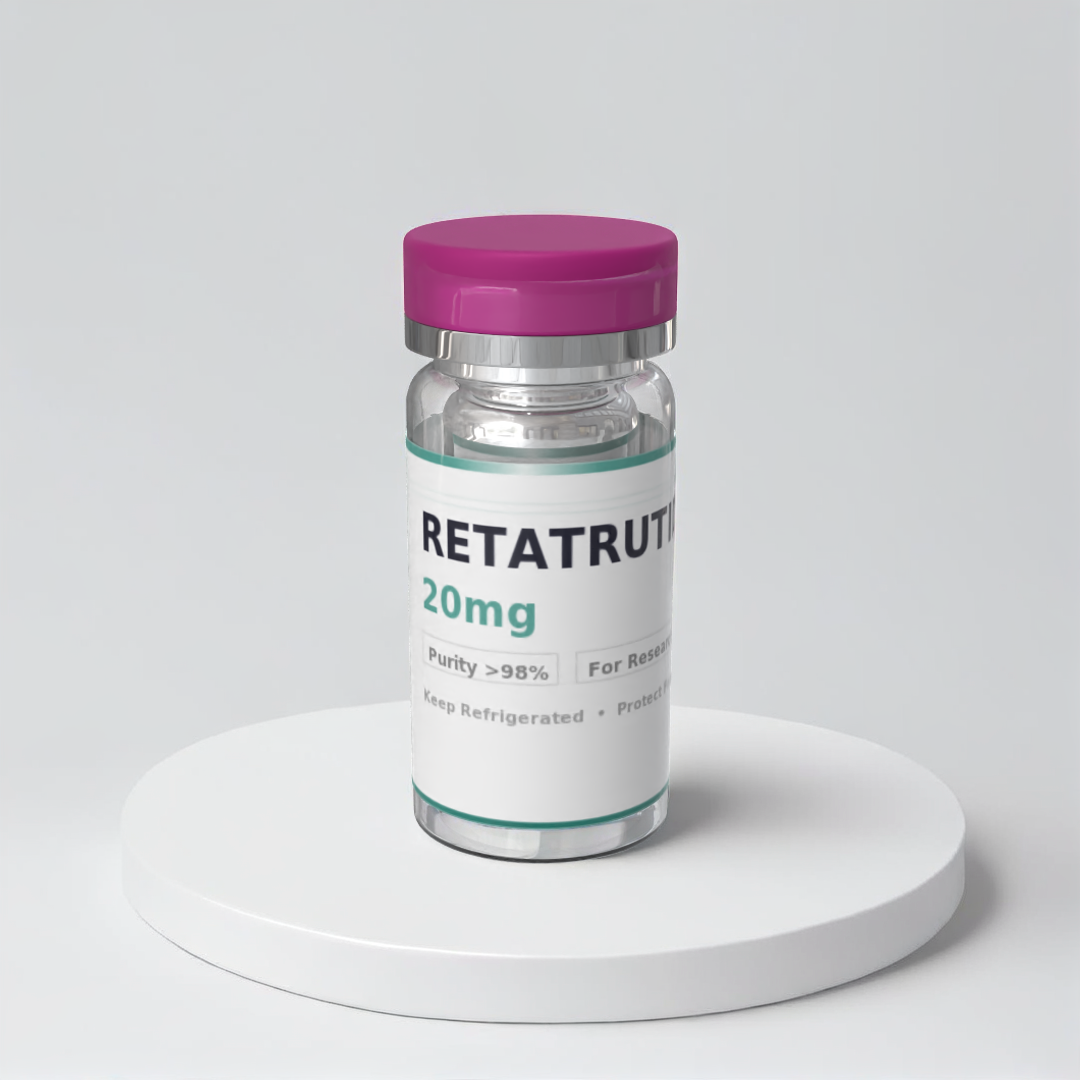
Retatrutide
20mg/vial · Triple GIP/GLP-1/Glucagon Agonist — Extended Protocol
Retatrutide is a next-generation triple agonist targeting GLP-1, GIP, and glucagon receptors simultaneously. Phase 2 clinical trials demonstrated up to 24.2% mean body weight reduction at 48 weeks — the highest efficacy reported among investigational peptides.The glucagon receptor component adds direct hepatic fat oxidation, making it uniquely potent for metabolic research.
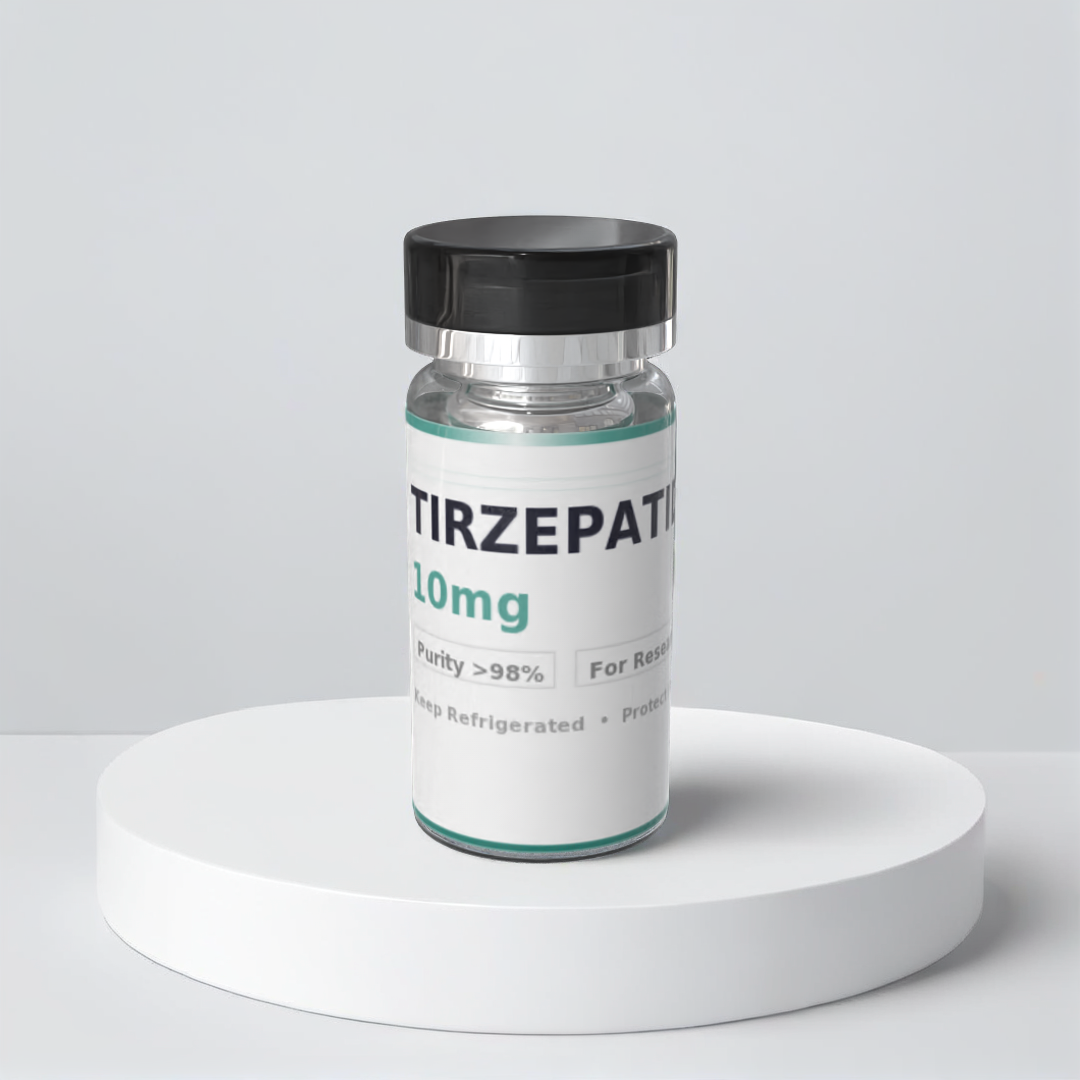
Tirzepatide
10mg/vial · Dual GIP/GLP-1 Agonist
Tirzepatide is a dual GIP and GLP-1 receptor agonist that demonstrated up to 22.5% weight reduction in the SURMOUNT clinical trials. Marketed as Mounjaro for type 2 diabetes and Zepbound for weight management, it combines complementary metabolic pathways for superior efficacy over single-receptor agonists — a benchmark peptide for obesity and metabolic research.