STEP-1: Semaglutide 2.4 mg and 14.9% Mean Weight Loss in 68 Weeks
14 May 2026 · 9 min read
In March 2021, the New England Journal of Medicine published STEP-1 — the pivotal Phase 3 trial that established once-weekly semaglutide 2.4 mg as a weight-loss agent. With 14.9% mean weight reduction over 68 weeks in 1,961 participants, it reset expectations for what pharmacological weight management could achieve.
The short version
STEP-1 was the pivotal Phase 3 trial of once-weekly semaglutide 2.4 mg, published in the New England Journal of Medicine in 2021. Across 1,961 adults with overweight or obesity, mean body weight fell 14.9% over 68 weeks, against 2.4% on placebo — roughly 15.3 kg.
It was the first time a weight-loss drug had cleared 10% in a large trial, and it is the result every later compound is measured against. Semaglutide is marketed as Ozempic for type 2 diabetes and Wegovy for weight management. Nothing here is medical advice.
The Trial
1,961 adults with a BMI ≥30 (or ≥27 with at least one weight-related condition, without type 2 diabetes) were randomised 2:1 to semaglutide 2.4 mg once weekly or placebo, plus lifestyle intervention, for 68 weeks.
Key Results
- 14.9% mean body weight reduction from baseline (vs. 2.4% placebo)
- Mean weight loss of 15.3 kg (33.7 lbs)
- 86% of participants in the semaglutide group achieved ≥5% weight loss vs. 32% on placebo
- 50% achieved ≥15% weight loss vs. 5% on placebo
Improvements in waist circumference, blood pressure, blood glucose, and lipid profiles were also observed.
"The mean weight loss of 14.9% with semaglutide was substantially greater than that seen with previously available pharmacotherapies for obesity." — Wilding et al., NEJM 2021
Why 14.9% mattered so much at the time
The number reads modestly now, next to tirzepatide's 22.5% and retatrutide's 24.2%. In 2021 it was a step change.
Before STEP-1, approved weight-loss pharmacotherapy topped out around 10% in large trials, and most sat well below that. Bariatric surgery was the only intervention reliably producing more. A drug reaching 14.9% closed a meaningful part of that gap for the first time, which is why the trial changed prescribing practice rather than just adding an option.
The secondary results mattered as much as the headline. Half the semaglutide group lost at least 15% of body weight, against 5% on placebo. That is the threshold at which weight-related conditions tend to improve measurably, so it moved the conversation from cosmetic effect to clinical outcome.
GLP-1 Mechanism
Semaglutide is a GLP-1 receptor agonist — it mimics glucagon-like peptide-1, a gut hormone released after eating. It activates GLP-1 receptors in the hypothalamus to reduce appetite and food intake, and slows gastric emptying to increase satiety. At 2.4 mg weekly (higher than the diabetes dose of 1 mg), the appetite-suppressing effect is sustained.
Ozempic, Wegovy, and the naming confusion
Semaglutide is sold under different brand names depending on the indication and dose, which is a common source of confusion.
Ozempic is semaglutide for type 2 diabetes, dosed lower than the weight-management dose — the trial itself contrasts 2.4 mg against the 1 mg diabetes dose. Wegovy is the same molecule for weight management at the 2.4 mg weekly dose used in STEP-1. Rybelsus is an oral semaglutide formulation for diabetes.
So Ozempic and Wegovy are not different drugs — they are the same compound at different doses with different approved indications. STEP-1 tested the 2.4 mg dose, which is the Wegovy dose, not the diabetes dose.
Safety
Nausea was reported in 44% of the semaglutide group vs. 16% placebo, mostly mild-to-moderate and transient. Vomiting and diarrhoea were also more common with semaglutide. Serious adverse events occurred at similar rates between groups (9.8% vs. 6.4%), with gallbladder-related events more common with semaglutide — consistent with the GLP-1 class and rapid weight loss.
What STEP-1 did not answer
A pivotal trial is designed to answer one question well, and it is worth being clear about what falls outside that.
Durability. STEP-1 measured weight at 68 weeks while participants were still taking the drug. It was not designed to establish what happens afterwards, and a trial that ends at a fixed endpoint cannot tell you whether the effect persists once treatment stops.
Who benefits most. The mean tells you about the average participant, not about the spread. Half the semaglutide group lost at least 15%, which necessarily means half lost less, and some considerably less. Trial means are routinely read as though everyone got that result.
Long-term safety. 68 weeks is long for a weight-loss trial and short for a chronic therapy. Gallbladder-related events showed up more often on semaglutide here, and rarer effects need longer follow-up and larger populations than a single pivotal trial provides.
None of this diminishes the result. It is the ordinary boundary of what one trial establishes, and it is why the compound continued to be studied after approval rather than being treated as settled.
Historical Context
Before STEP-1, no approved weight-loss drug had demonstrated more than ~10% weight reduction in large trials. Semaglutide's 14.9% result prompted a re-evaluation of obesity treatment, setting the stage for tirzepatide (22.5% in SURMOUNT-1) and retatrutide (24.2% in Phase 2) in the years that followed.
Frequently asked questions
What did the STEP-1 trial show? Adults with overweight or obesity taking once-weekly semaglutide 2.4 mg lost a mean 14.9% of body weight over 68 weeks, against 2.4% on placebo, in a trial of 1,961 participants published in the New England Journal of Medicine in 2021.
How much weight did people lose on semaglutide? A mean of 15.3 kg, or about 33.7 lbs. 86% of the semaglutide group lost at least 5% of body weight and 50% lost at least 15%, against 32% and 5% respectively on placebo.
How long did it take? 68 weeks, which is roughly 16 months. Weight-loss curves in this trial had not fully plateaued by the endpoint.
What is semaglutide? A GLP-1 receptor agonist that mimics glucagon-like peptide-1, a gut hormone released after eating. It acts on GLP-1 receptors in the hypothalamus to reduce appetite and slows gastric emptying to increase satiety.
What is the difference between Ozempic and Wegovy? They are the same molecule at different doses for different approved indications — Ozempic is semaglutide for type 2 diabetes, Wegovy is semaglutide at the 2.4 mg weekly weight-management dose used in STEP-1.
What were the side effects? Nausea was reported in 44% of the semaglutide group against 16% on placebo, mostly mild to moderate and transient, with vomiting and diarrhoea also more common. Serious adverse events occurred at broadly similar rates between groups, at 9.8% against 6.4%, with gallbladder-related events more common on semaglutide.
How does semaglutide compare to tirzepatide and retatrutide? STEP-1 recorded 14.9% for semaglutide over 68 weeks, SURMOUNT-1 recorded 22.5% for tirzepatide, and retatrutide recorded 24.2% in Phase 2. The ordering tracks how many receptors each compound activates — one, two and three respectively — though these are separate trials rather than a head-to-head comparison.
Lotus Labs supplies all products for research purposes only. This article summarises published trial data and is not medical advice.
Reference
Wilding JPH, Batterham RL, Calanna S, et al. Once-Weekly Semaglutide in Adults with Overweight or Obesity. N Engl J Med 2021;384:989–1002. https://www.nejm.org/doi/full/10.1056/NEJMoa2032183 · PMID: 33567185
Related peptides
Research-grade, free tracked delivery across Thailand.
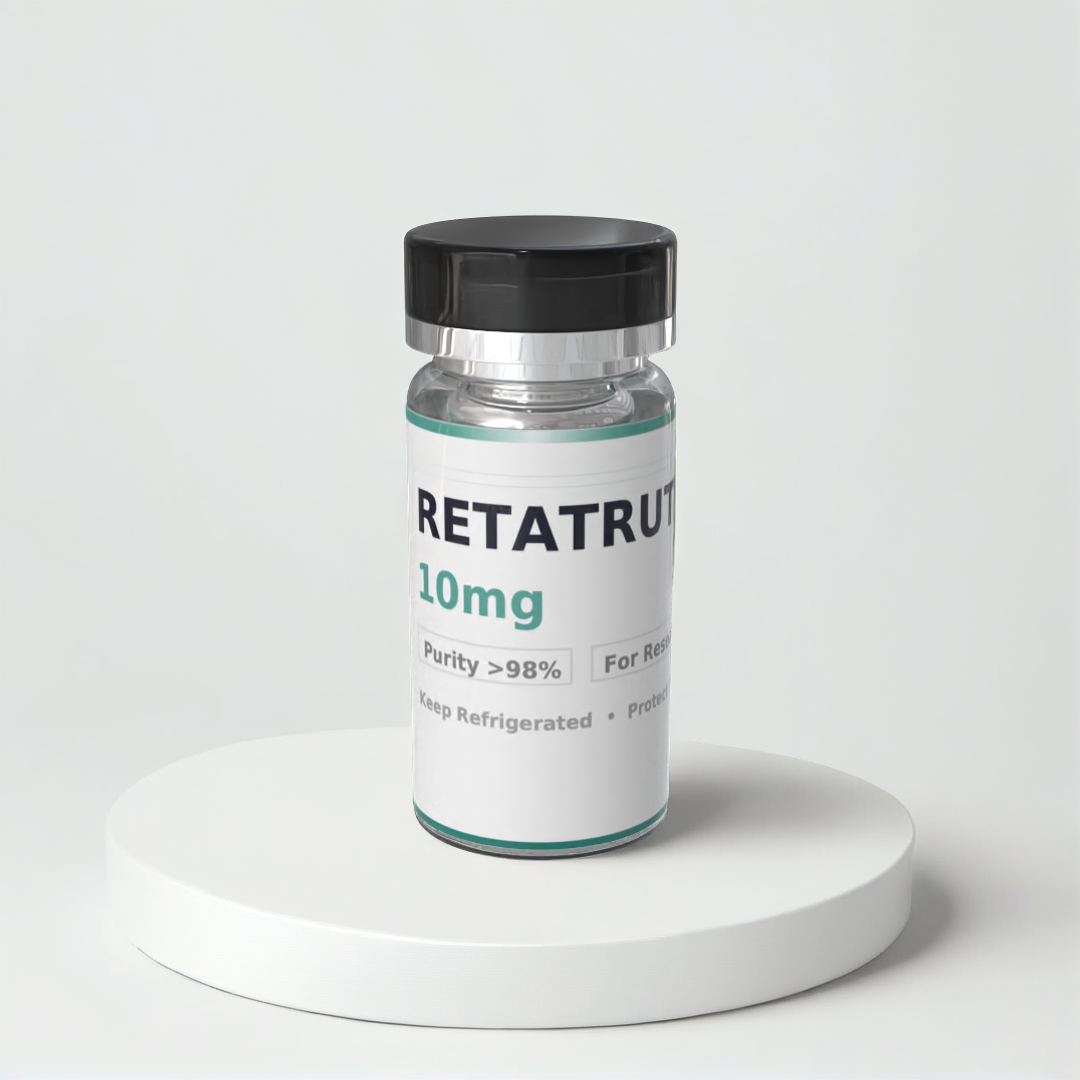
Retatrutide
10mg/vial · Triple GIP/GLP-1/Glucagon Agonist
Retatrutide is a next-generation triple agonist targeting GLP-1, GIP, and glucagon receptors simultaneously. Phase 2 clinical trials demonstrated up to 24.2% mean body weight reduction at 48 weeks — the highest efficacy reported among investigational peptides.The glucagon receptor component adds direct hepatic fat oxidation, making it uniquely potent for metabolic research.
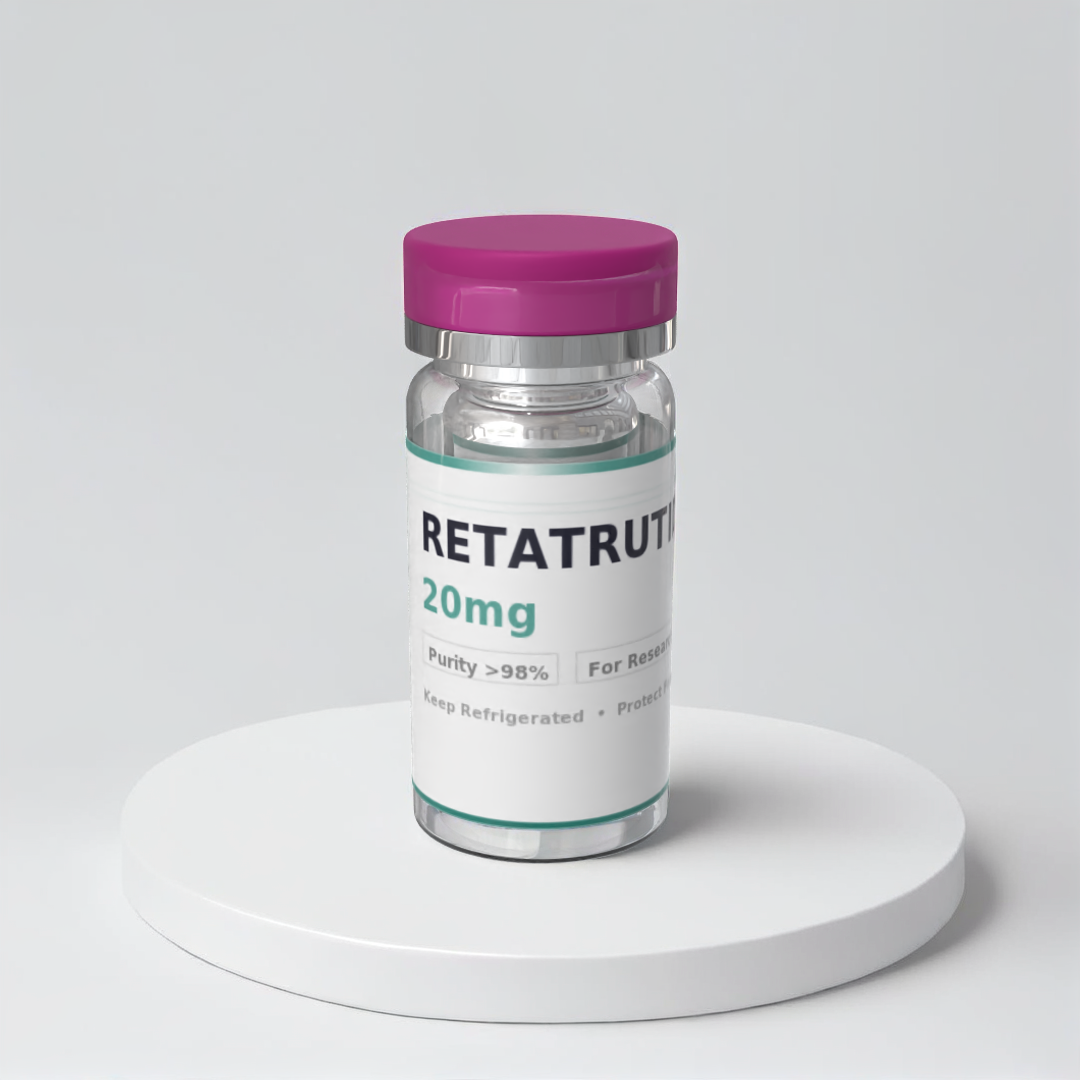
Retatrutide
20mg/vial · Triple GIP/GLP-1/Glucagon Agonist — Extended Protocol
Retatrutide is a next-generation triple agonist targeting GLP-1, GIP, and glucagon receptors simultaneously. Phase 2 clinical trials demonstrated up to 24.2% mean body weight reduction at 48 weeks — the highest efficacy reported among investigational peptides.The glucagon receptor component adds direct hepatic fat oxidation, making it uniquely potent for metabolic research.
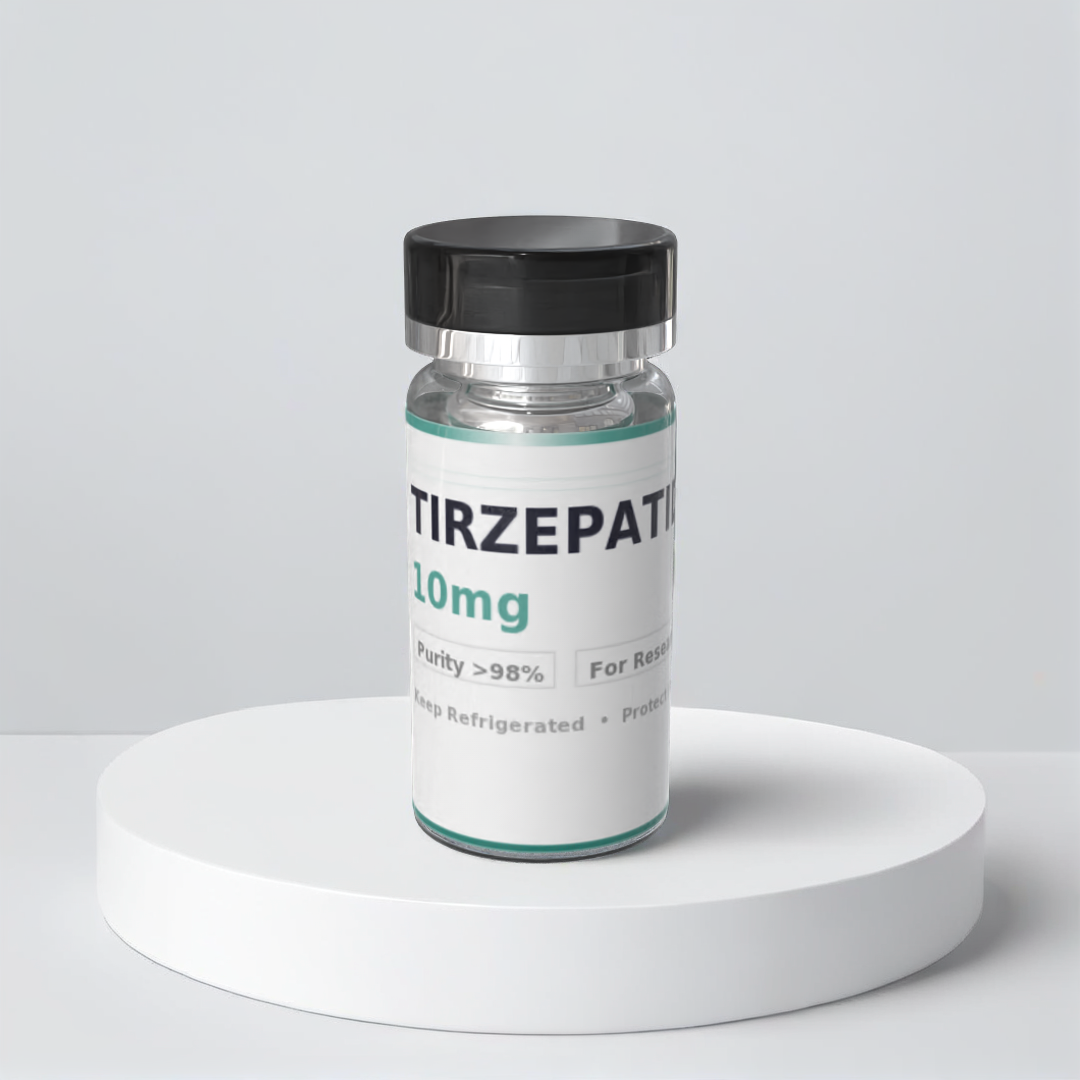
Tirzepatide
10mg/vial · Dual GIP/GLP-1 Agonist
Tirzepatide is a dual GIP and GLP-1 receptor agonist that demonstrated up to 22.5% weight reduction in the SURMOUNT clinical trials. Marketed as Mounjaro for type 2 diabetes and Zepbound for weight management, it combines complementary metabolic pathways for superior efficacy over single-receptor agonists — a benchmark peptide for obesity and metabolic research.