GLP-1 Peptide Trials: What 5,838 Subjects Tell Us
7 May 2026 · 10 min read
Three trials. Three consecutive issues of the New England Journal of Medicine. A total of 5,838 subjects. Taken together, STEP-1 (semaglutide), SURMOUNT-1 (tirzepatide), and the retatrutide Phase 2 form the clearest clinical dataset we have on what adding receptor targets does to weight-loss outcomes.
The short version
Three trials published in consecutive years in the New England Journal of Medicine tested one, two and three receptor targets in turn. Mean weight loss rose with each: semaglutide 14.9%, tirzepatide 22.5%, retatrutide 24.2%.
The pattern is consistent, but these are three separate trials rather than a head-to-head comparison — different durations, doses and populations. The ordering is suggestive, not a controlled result. Nothing here is medical advice.
The Three Trials at a Glance
| Peptide | Trial | Year | Subjects | Duration | Mean Weight Loss (highest dose) |
|---|---|---|---|---|---|
| Semaglutide | STEP-1 | 2021 | 1,961 | 68 wk | 14.9% |
| Tirzepatide | SURMOUNT-1 | 2022 | 2,539 | 72 wk | 22.5% |
| Retatrutide | Phase 2 | 2023 | 338 | 48 wk | 24.2% |
What Each Generation Added
Semaglutide (GLP-1 only) established the GLP-1 class as viable for weight loss. 14.9% mean reduction in 68 weeks was unprecedented for a pharmacological agent at the time. The mechanism: appetite suppression via hypothalamic GLP-1 receptors + slowed gastric emptying.
Tirzepatide (GLP-1 + GIP) added GIP receptor agonism. The dual mechanism produced 22.5% in 72 weeks — a 7.6 percentage point improvement over semaglutide. Notably, 57% of tirzepatide participants lost ≥20% of body weight, a threshold previously associated only with bariatric surgery.
Retatrutide (GLP-1 + GIP + glucagon) added glucagon receptor agonism, which increases energy expenditure. The triple mechanism pushed mean weight loss to 24.2% in just 48 weeks — four weeks shorter than STEP-1 and 24 weeks shorter than SURMOUNT-1.
"Each added receptor target has produced a meaningful, not marginal, improvement in outcome."
The 5%, 15%, 20% Thresholds
Clinicians use these thresholds because they correspond to measurable health outcomes — 5% for metabolic markers, 15% for cardiovascular risk, 20% for near-surgical benefit.
| Threshold | Semaglutide | Tirzepatide | Retatrutide |
|---|---|---|---|
| ≥5% weight loss | 86% of subjects | 91% | 100% |
| ≥15% weight loss | 50% | 63% | 83% |
| ≥20% weight loss | 30% | 57% | not published |
A note on the retatrutide column. These figures were previously wrong here, and the correction is worth stating openly. Earlier versions carried estimates at the ≥15% and ≥20% rows, and listed 83% against ≥5%. The published Phase 2 values are 100% at ≥5%, 93% at ≥10% and 83% at ≥15% — 83% is the ≥15% figure, not the ≥5% one. The ≥20% row stays blank because the paper does not report that threshold; it reports 26% of participants reaching ≥30%. An estimate sitting beside published values reads as though it were one, so a blank is the honest entry.
The duration column does more work than it looks
The table's most under-read column is duration, and it cuts against the headline ordering rather than supporting it.
Retatrutide's 24.2% was measured at 48 weeks. Semaglutide's 14.9% was measured at 68, and tirzepatide's 22.5% at 72. Weight-loss curves in this class have generally not flattened by the end of trial, so the shortest trial in the table is the one showing the largest effect — which understates rather than inflates the gap.
Read the other way, it also complicates the comparison. If semaglutide had been measured at 48 weeks its figure would have been lower than 14.9%, and the spread between the three would look wider than the table suggests. Neither reading is available from these trials, because none of them reported a common timepoint.
This is the concrete reason a head-to-head trial would settle something these three cannot. Same duration, same population, same escalation schedule, three arms. Until that exists, the ordering is a strong pattern across independent programmes rather than a measured difference.
What the Phase 3 data changed
The retatrutide entry in this table has been the weakest since it was written, because it was Phase 2 — 338 participants against thousands, and 48 weeks against 68 and 72.
The Phase 3 TRIUMPH programme has since reported roughly 25% mean weight loss at 80 weeks on the top dose. That matters less for the number, which moved only slightly, than for what stands behind it: a trial large enough and long enough to sit in the same category as the other two rows.
What the Data Does Not Tell Us
These trials are not directly comparable: different durations, different doses, different populations. The retatrutide trial enrolled fewer subjects (338 vs. 1,961 and 2,539) and was Phase 2, not Phase 3. Phase 3 retatrutide trials will produce the definitive numbers.
What the data does support clearly: each receptor added has produced compounding, not diminishing, returns across three independent trials in comparable populations.
Frequently asked questions
Which GLP-1 peptide produced the most weight loss in trials? Retatrutide, at 24.2% over 48 weeks in its Phase 2 trial, ahead of tirzepatide at 22.5% over 72 weeks and semaglutide at 14.9% over 68 weeks. Phase 3 retatrutide results have since reported roughly 25% at 80 weeks.
Can these three trials be compared directly? Not strictly. They ran for different durations, used different doses, and enrolled different populations, and none tested the compounds against each other. The consistency of the ordering across independent programmes is what makes it interesting, not the precision of the gaps.
Why does adding receptors increase weight loss? Semaglutide activates GLP-1 receptors, which suppress appetite and slow gastric emptying. Tirzepatide adds GIP, which appears to add metabolic effect and improve tolerability. Retatrutide adds glucagon, which increases energy expenditure. Each addition targets a different part of energy balance.
How many people were in these trials? 5,838 in total — 1,961 in STEP-1, 2,539 in SURMOUNT-1 and 338 in the retatrutide Phase 2.
What do the 5%, 15% and 20% thresholds mean? They are the levels at which measurable health changes tend to appear: roughly 5% for metabolic markers, 15% for cardiovascular risk, and 20% for benefits previously associated mainly with bariatric surgery.
Was the retatrutide trial as robust as the others? No. It was a Phase 2 trial of 338 participants over 48 weeks, against Phase 3 trials of 1,961 and 2,539 participants over 68 and 72 weeks. It is a smaller, shorter, earlier-stage result, which is why the Phase 3 TRIUMPH readouts matter.
Are all three approved? Semaglutide and tirzepatide are approved for weight management. Retatrutide is not approved anywhere and remains investigational.
Lotus Labs supplies all products for research purposes only. This article summarises published trial data and is not medical advice.
Reference
Wilding et al. N Engl J Med 2021;384:989. · Jastreboff et al. N Engl J Med 2022;387:205. · Jastreboff et al. N Engl J Med 2023;389:514.
Related peptides
Research-grade, free tracked delivery across Thailand.
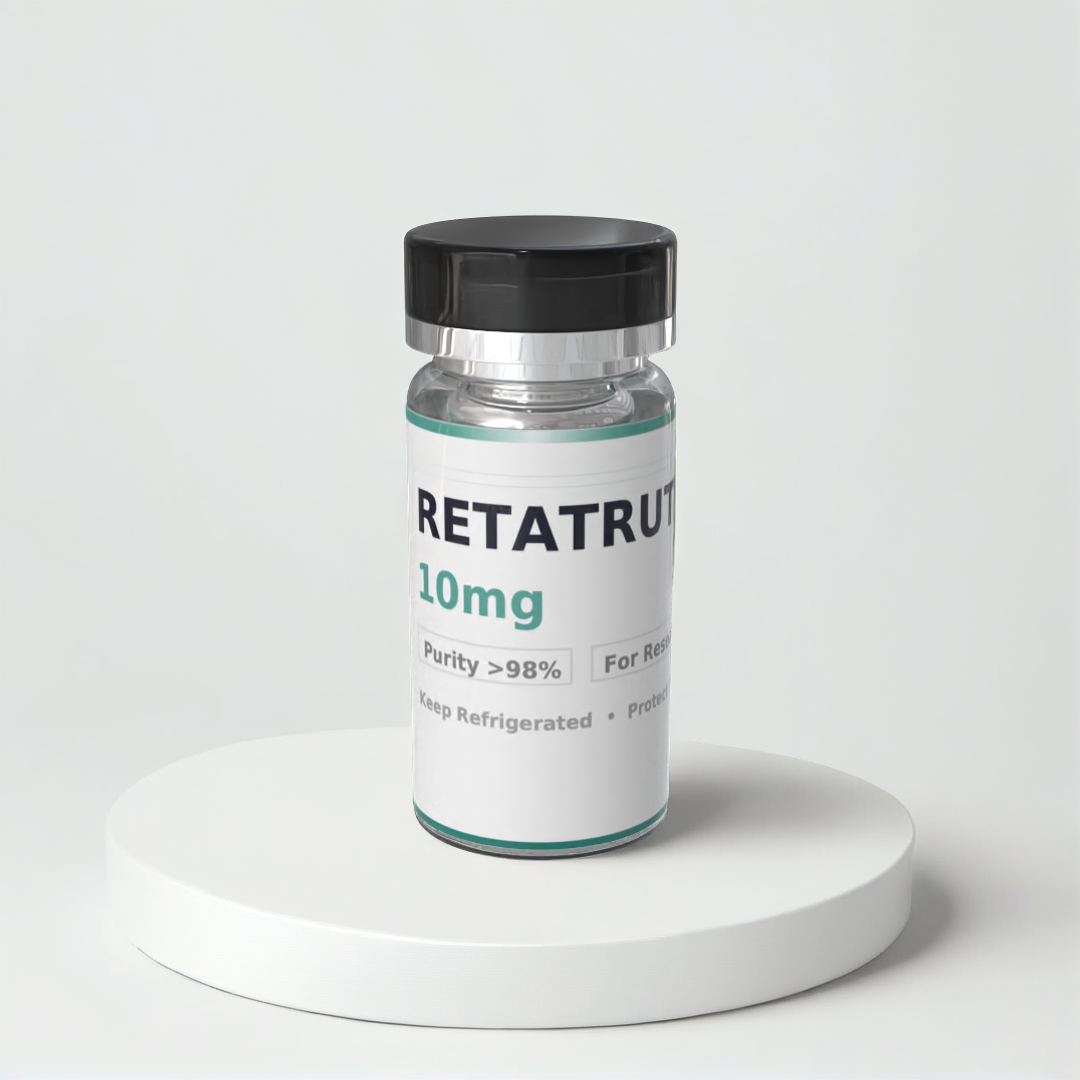
Retatrutide
10mg/vial · Triple GIP/GLP-1/Glucagon Agonist
Retatrutide is a next-generation triple agonist targeting GLP-1, GIP, and glucagon receptors simultaneously. Phase 2 clinical trials demonstrated up to 24.2% mean body weight reduction at 48 weeks — the highest efficacy reported among investigational peptides.The glucagon receptor component adds direct hepatic fat oxidation, making it uniquely potent for metabolic research.
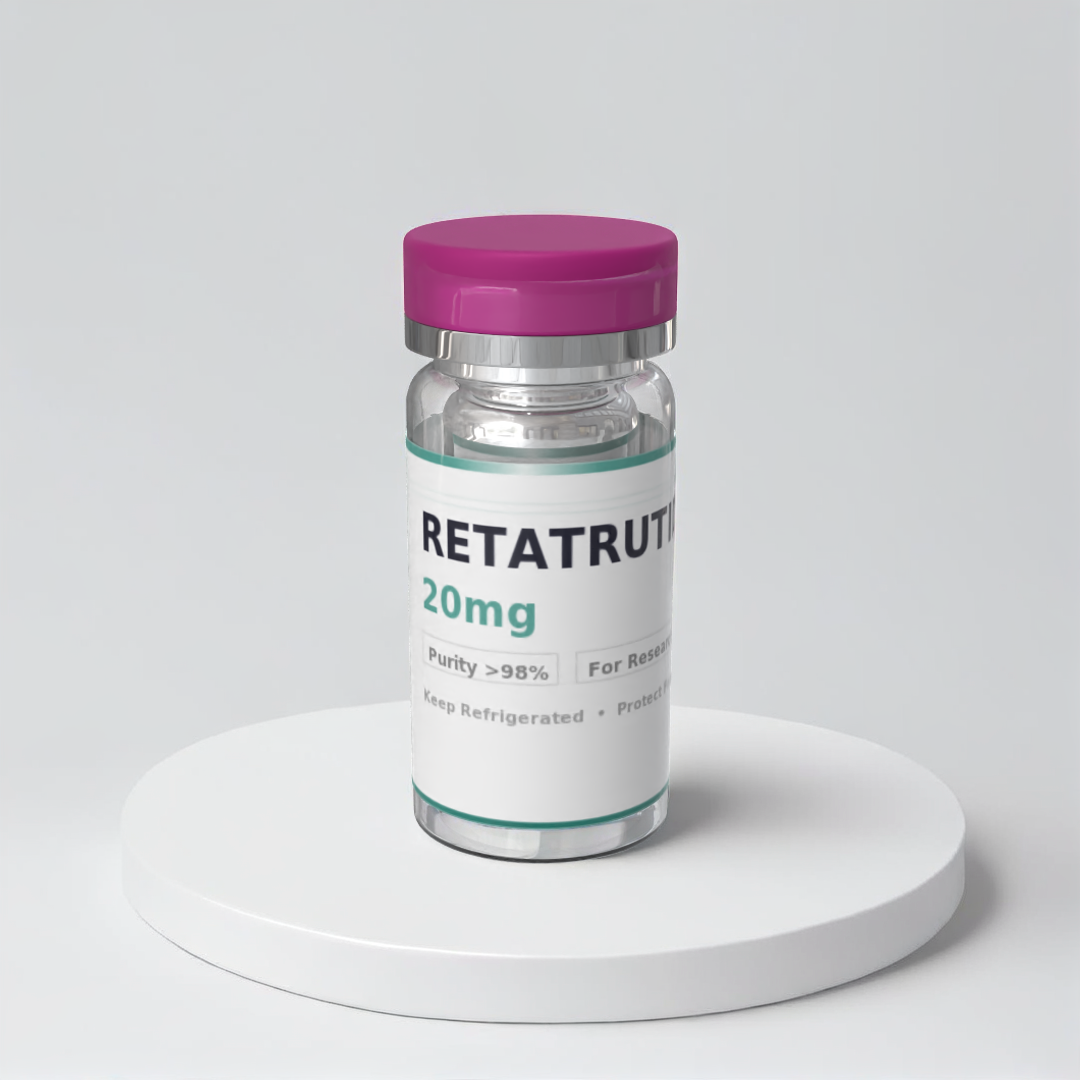
Retatrutide
20mg/vial · Triple GIP/GLP-1/Glucagon Agonist — Extended Protocol
Retatrutide is a next-generation triple agonist targeting GLP-1, GIP, and glucagon receptors simultaneously. Phase 2 clinical trials demonstrated up to 24.2% mean body weight reduction at 48 weeks — the highest efficacy reported among investigational peptides.The glucagon receptor component adds direct hepatic fat oxidation, making it uniquely potent for metabolic research.
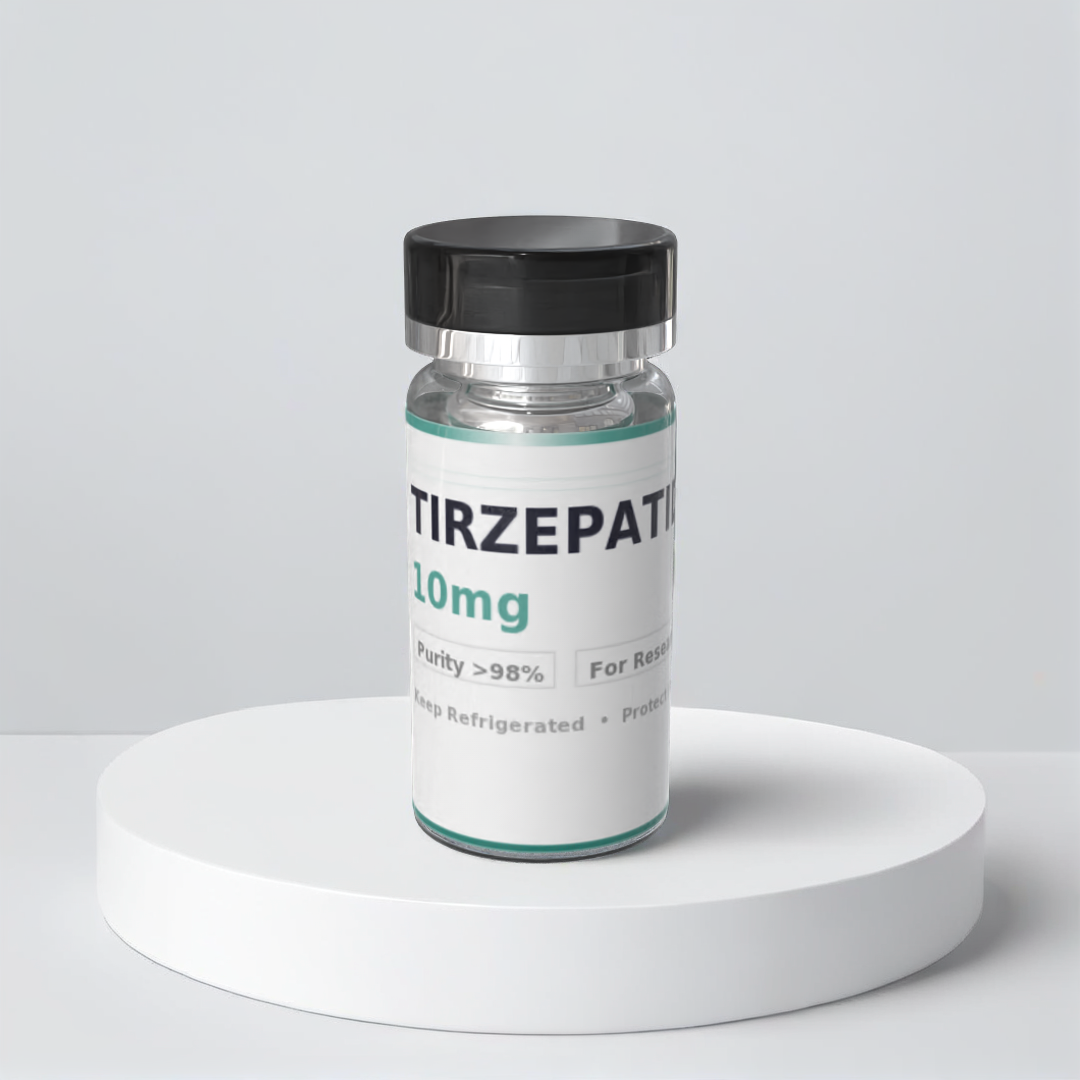
Tirzepatide
10mg/vial · Dual GIP/GLP-1 Agonist
Tirzepatide is a dual GIP and GLP-1 receptor agonist that demonstrated up to 22.5% weight reduction in the SURMOUNT clinical trials. Marketed as Mounjaro for type 2 diabetes and Zepbound for weight management, it combines complementary metabolic pathways for superior efficacy over single-receptor agonists — a benchmark peptide for obesity and metabolic research.