GHK-Cu and Collagen: What a Randomised Human Trial Found
16 April 2026 · 8 min read
GHK-Cu (copper tripeptide) has been studied in human skin since the late 1990s. The most cited human evidence comes from a randomised trial published by Abdulghani et al. comparing topical copper peptide against tretinoin — the gold standard topical for skin remodelling — over a 12-week period.
The short version
GHK-Cu is a naturally occurring copper-binding tripeptide found in human plasma and released after tissue injury. The most cited human evidence is a pilot trial in 67 women, where 70% of the GHK-Cu group showed measurable collagen increases over 12 weeks, against 40% in the tretinoin comparison group.
Two things to hold alongside that number: the trial was a small pilot published in a specialised journal, and the result is for a topical cream, not an injected peptide. Nothing here is medical advice.
The Human Trial
67 women with moderate-to-severe facial ageing were randomised to one of four topical treatment groups: GHK-Cu cream, vitamin C cream, melatonin cream, or tretinoin. Assessments at 4, 8, and 12 weeks included clinical evaluation and skin biopsies analysed for collagen density via immunohistology.
Key Results
- 70% of subjects in the GHK-Cu group showed measurable increases in collagen density — compared to 40% in the tretinoin group
- Improvements in skin laxity and fine lines were observed clinically in the GHK-Cu group
- GHK-Cu was better tolerated than tretinoin (which caused irritation in a subset of subjects)
Topical is not the same as injected
This is the single most important caveat on this page, and it is routinely lost when the 70% figure is quoted.
The Abdulghani trial tested topical creams. Participants applied GHK-Cu to facial skin, and the biopsies measuring collagen density were taken from the skin that had been treated. The result says something about copper peptide applied to skin over 12 weeks. It says nothing about the same peptide administered any other way.
That distinction matters because GHK-Cu is sold in research supply as a lyophilised powder for reconstitution, and the human evidence base attached to it in marketing is almost entirely this topical trial. There is no human trial of injected GHK-Cu for skin remodelling that carries comparable weight.
The mechanism does not resolve the gap either. A peptide reaching dermal fibroblasts by diffusion from a cream and one distributed systemically are different exposures, and the trial only characterised the first.
Supporting Fibroblast Data
A 2001 study by McCormack et al. (PMID: 11176716) using a serum-free fibroblast model found that copper tripeptide reduced TGF-β1 secretion — suggesting a mechanism for reducing excessive scar and keloid formation — while simultaneously supporting collagen synthesis. This supports the in-vivo findings: GHK-Cu appears to remodel rather than simply stimulate collagen, potentially improving scar quality as well as skin density.
Mechanism
GHK-Cu is a naturally occurring tripeptide (glycyl-L-histidyl-L-lysine) with a high affinity for copper ions. It is present in human plasma and released after tissue injury. The copper complex activates pathways involved in wound healing, collagen synthesis, and tissue remodelling. Unlike growth factors that simply upregulate production, GHK-Cu appears to modulate the balance between synthesis and degradation.
Why a copper peptide at all
GHK-Cu is unusual among the compounds in this category because it is not a designed drug. It is a fragment of a protein your own body makes.
The tripeptide sequence occurs naturally in human plasma and is released when tissue is damaged, where it appears to act as a signal in the repair response. Its affinity for copper is the functional part — copper is a required cofactor for lysyl oxidase, the enzyme that cross-links collagen and elastin fibres, and the peptide's role appears to involve delivering it where remodelling is happening.
Plasma levels of the peptide decline with age, which is the observation the cosmetic interest originally grew from. That decline is real and documented; the inference that supplementing it reverses ageing is not, and does not follow from it. A substance being present in youth and reduced in age tells you it correlates with something, not that adding it back reproduces the earlier state.
This is also why the topical result is more plausible than it might first appear. The trial applied a copper-carrying peptide to tissue where collagen remodelling occurs, which is roughly the context the molecule operates in naturally.
Evidence Limitations
The Abdulghani 1998 trial was a pilot study in a specialised journal; it has been extensively cited in secondary literature but the original paper is difficult to access directly. The fibroblast data (McCormack 2001) is in vitro. The human collagen findings are suggestive, not definitive — a larger placebo-controlled RCT would strengthen the evidence base.
Frequently asked questions
What is GHK-Cu? A naturally occurring tripeptide, glycyl-L-histidyl-L-lysine, with high affinity for copper ions. It is present in human plasma and released after tissue injury, and it is involved in wound healing and tissue remodelling pathways.
What did the human collagen trial find? In 67 women with moderate-to-severe facial ageing, 70% of the GHK-Cu group showed measurable increases in collagen density over 12 weeks, compared with 40% in the tretinoin group. Clinical improvements in skin laxity and fine lines were also observed.
Was the trial topical or injected? Topical. Participants applied creams, and biopsies were taken from treated skin. There is no comparable human trial of injected GHK-Cu for skin remodelling.
How does GHK-Cu compare to tretinoin? In that trial GHK-Cu produced collagen increases in a greater proportion of subjects than tretinoin, 70% against 40%, and was better tolerated — tretinoin caused irritation in a subset of subjects.
How strong is the evidence? Suggestive rather than definitive. The trial was a pilot study in a specialised journal whose original text is difficult to access directly, and the supporting fibroblast work is in vitro. A larger placebo-controlled randomised trial would be needed to settle it.
What does the fibroblast research add? A 2001 serum-free fibroblast study found copper tripeptide reduced TGF-β1 secretion while supporting collagen synthesis, which suggests it modulates the balance between building and breaking down tissue rather than simply stimulating production.
Is GHK-Cu approved as a medicine? No. It appears in cosmetic formulations, but it is not an approved medicine, and Lotus Labs supplies it for research purposes only.
Lotus Labs supplies all products for research purposes only. This article summarises published trial data and is not medical advice.
Reference
Abdulghani AA, Sherr S, Shirin S, et al. Effects of topical creams containing vitamin C, a copper-binding peptide cream and melatonin compared with tretinoin on the ultrastructure of normal skin — a pilot clinical, histologic, and ultrastructural study. Dis Manag Clin Outcomes 1998;1(4):136–141. · McCormack MC, Nowak KC, Koch RJ. The effect of copper tripeptide and tretinoin on growth factor production in a serum-free fibroblast model. Arch Facial Plast Surg 2001;3(1):28–32. PMID: 11176716
Related peptides
Research-grade, free tracked delivery across Thailand.
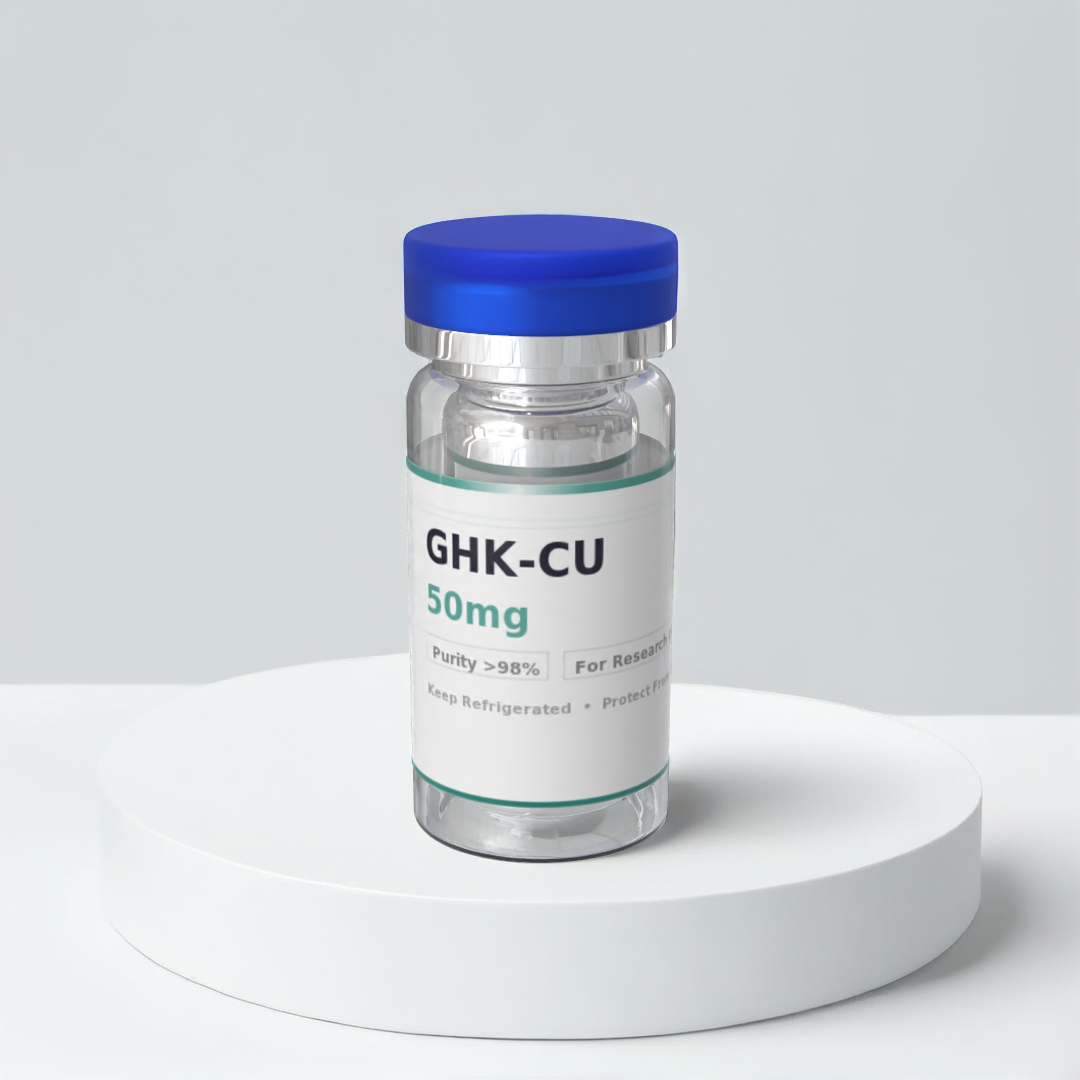
GHK-CU
50mg/vial · Copper Peptide for Tissue Remodelling
GHK-CuU (Copper Peptide) is a naturally occurring tripeptide found in human plasma, saliva, and urine. Research has demonstrated wound-healing, anti-inflammatory, and tissue-remodelling properties. Lotus Labs supplies GHK-Cu at >98% purity for laboratory research only.
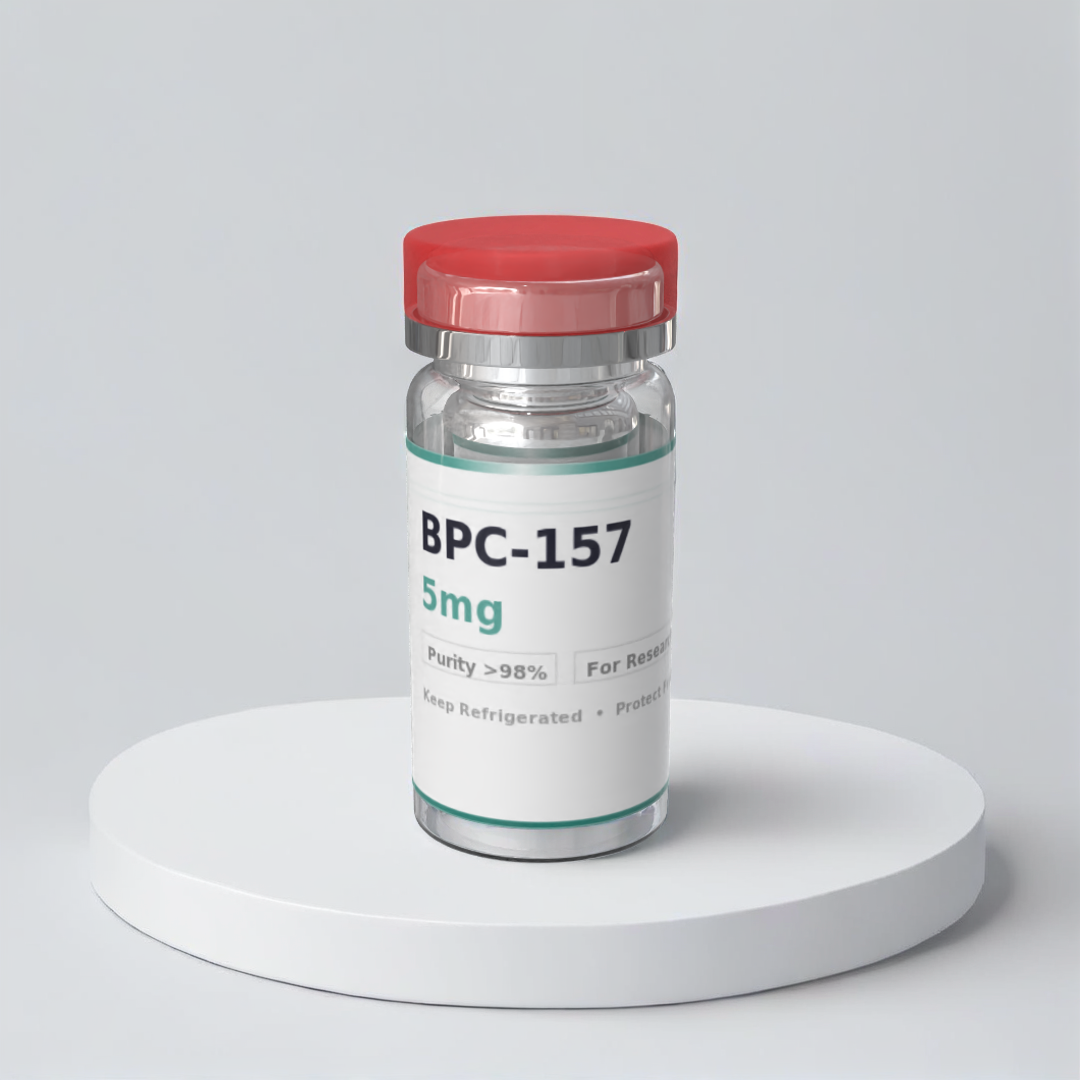
BPC-157
5mg/vial · Body Protection Compound for Tissue Repair
BPC-157 (Body Protection Compound) is a synthetic peptide derived from a protective gastric protein. Research has explored its potential in tissue repair, gut healing, and musculoskeletal recovery. Lotus Labs supplies BPC-157 at >98% purity for laboratory research only.
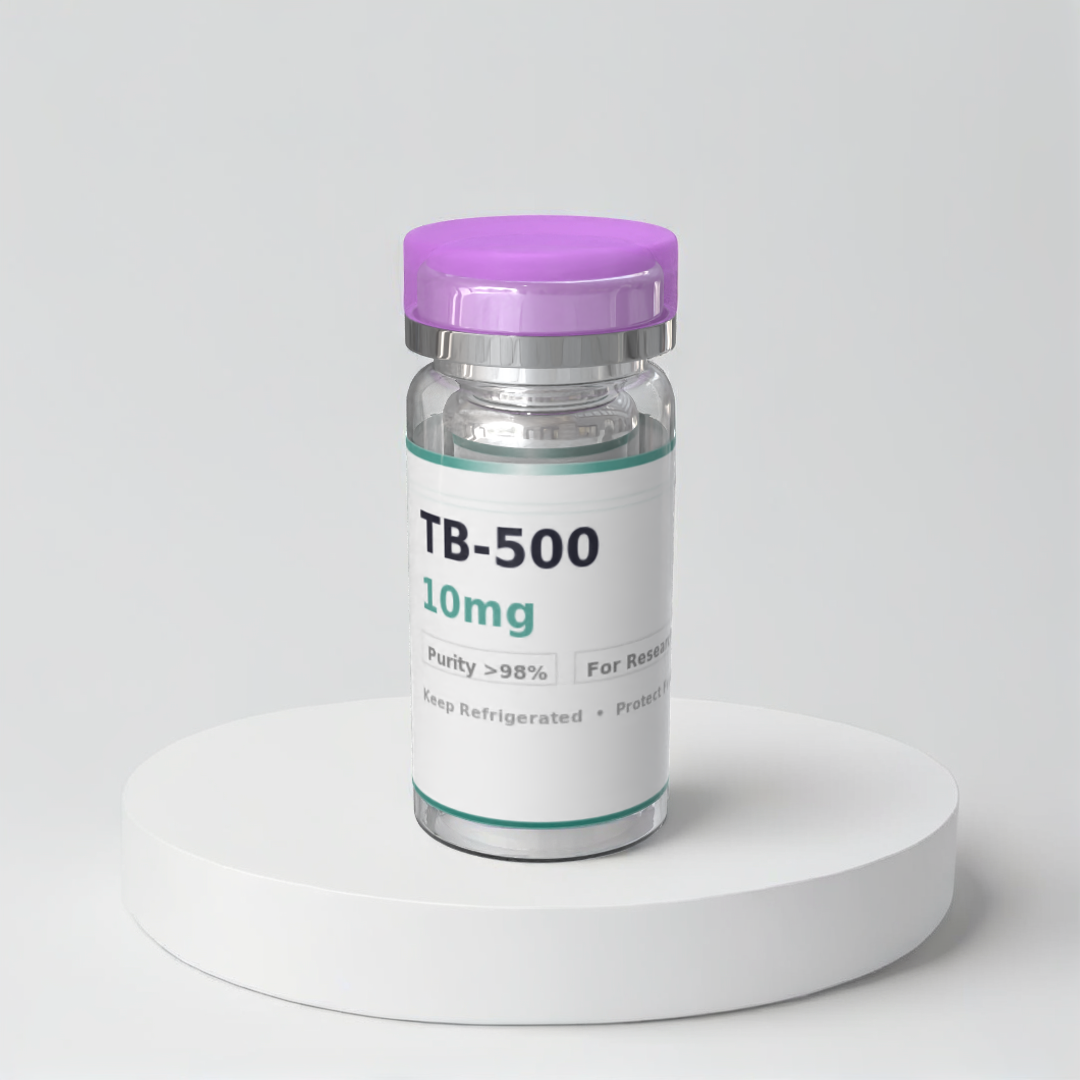
TB-500
10mg/vial · Thymosin Beta-4 for Tissue Repair
TB-500 (Thymosin Beta-4) is a naturally occurring peptide present in nearly all human and animal cells. Research has explored its role in promoting cell migration, tissue repair, and reduced inflammation. Lotus Labs supplies TB-500 at >98% purity for laboratory research only.